
Some international diplomats and observers of Rakhine affairs have stated that the Western bloc, led by the United States, is using Bang ladesh as a tool to counter Chinese interests in the geopol itically significant Arakan region and is playing a strategic game with the Rohigya refugees.
Although the Arakan Army (AA) has fully taken control of the Ara kan-Bangladesh border, viol ent attacks by armed groups claiming to represent the Rohingya have increased. Additionally, there has been a rise in the activities of these armed groups within the refu gee camps in Bang ladesh, according to statements from Rohigya refugees.
Additionally, overseas organizations claiming to represent the Rohingya and aligned with the Western bloc are reportedly pressuring the Arakan Army (AA) through publications. They are also allegedly collaborating with certain Spring Revolution groups to collect evid ence and information with the aim of filing international legal cases against the Arakan Army (AA), according to some groups involved in these efforts.
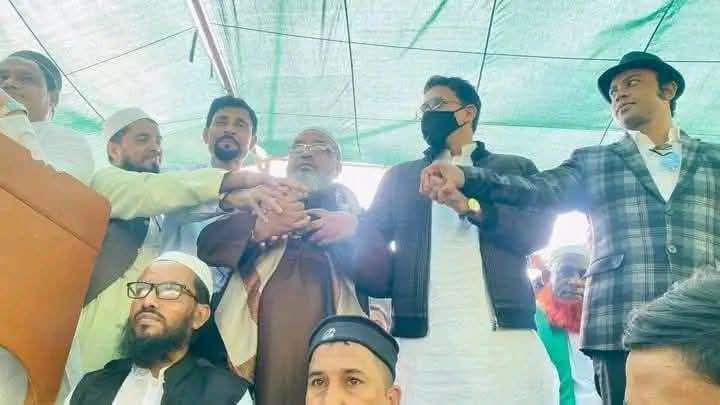
On December 25, over 100,000 refugees in the Cox’s Bazar camps in Bangladesh staged prot ests, calling on the international comm unity, including the United Nations, to assist in resolving their situ ation. During these demonstrations, armed groups claiming to repr esent the Rohingya joined and encouraged attacks on the Arakan Army (AA) with the aim of seizing control of the Arakan region, according to statements from members of the Rohigya community.
According to some Rohigya elders, the approval of certain Bangla deshi government officials was necessary for such large-scale prot ests involving tens of thousands of people. These officials are repo rtedly aligned with the Western bloc and are said to occasionally act on advice from certain Indian government officials.
“To gather such a large number of people and hold events like this, the approval of certain Bang ladeshi government officials is nece ssary. Leaders of groups like the RSO, ARSA, ARU, and others have been able to freely organize and deliver speeches with the backing of these officials. These Bangladeshi officials are believed to have sought advice from their Indian government counterparts with whom they have close ties. Some Bangladeshi authorities are also aware of what’s happening in the camps and what’s being discu ssed,” a Muslim elder from the Kutup along refugee camp in Bangladesh told the Border News Agency.
The mass gathering and mobilization event was reportedly organ ized under the leadership of the Arakan Rohingya Salvation Army (ARSA), the Rohingya Solidarity Organization (RSO), the Arakan Rohingya Union (ARU), and the Islami Mahaz group. According to attendees, these four groups agreed to collaborate and form a unified armed force to launch coordinated attacks in the future.
As a result, violent attacks along the Arakan-Bangladesh border are likely to increase, and the Western bloc may intensify its pressure on the Arakan Army (AA). Observers of Rakhine affairs have sugg ested that AA members, officials of the Arakan People’s Revolu tionary Government, and residents of Maungdaw District should remain vigilant in light of these developments.
Observers of Rakhine affairs have noted that various pressures are being applied on the Arakan Army (AA) to instigate violent conflicts and destabilize the region, thereby hindering the imple mentation of Chinese investment projects. This strategy is seen as a counter measure by India, whose projects in the region have faced chall enges, to disrupt China’s initiatives through proxy conflicts and instability.
“India has expressed concerns about the security of its projects in Sittwe, while the AA has pledged to protect Rakhine-based proj ects. However, it is certain that the AA intends to take control of Sittwe. To prevent direct conflict in Sittwe, efforts are being made to encourage clashes along the Bangladesh border,” an observer of Rakhine affairs told Border News Agency.
“This is seen as a counter measure against China, using the Rohingya issue via Bangladesh to disrupt Chinese interests,” the observer added.
As a result, there has been an increase in the activities of armed Rohingya militants along the Arakan-Bangladesh border. The Rohingya Solidarity Organization (RSO) is primarily engaged in armed activities and attacks along the waterways, while the Arakan Rohingya Salvation Army (ARSA) is reportedly involved in similar actions in the inland areas, according to residents of Maungdaw District.
Leaders of the Arakan Rohingya Salvation Army (ARSA), the Rohingya Solidarity Organization (RSO), the Arakan Rohingya Union (ARU), and the Islami Mahaz group, who are residing in refugee camps in Bangladesh, have been reportedly organizing and recruiting new militants, conti nuing their involvement in armed activ ities. Despite this, some Bangladeshi government officials are said to be either neglecting to take action or actively supporting these groups, leading to anincrease in their strength, according to Rohigya refugees.
Additionally, it is reported that Brigadier General Thu Rain Tun, a key figure in the military jun ta, along with his associate Dil Mamat, has been involved in the trafficking of Rohingya refugees and facili tating the trade of illicit drugs from Myanmar in Bangladesh. These activities are said to have contributed to the growing strength of these groups, according to Rohigya refugees.
According to Rohigya refugees, Brigadier General Thu Rain Tun’s associate Dil Mamat, along with other Rohingya leaders, has been involved in recruiting Rohingya refugees to fight for the military junta. These individuals reportedly charged fees to transport up to 7,000 refugees, with the intention of deploying them to engage in combat on behalf of the junta.
Although the Arakan Army (AA) has gained full control of the Arakan-Bangladesh border, disr upting some of the activities, Rohingya refugees in Bangladesh continue to recruit and train new fighters. This ongoing activity is expected to lead to a significant increase in armed militant atta cks within Maungdaw District during the upco ming monsoon season, according to the refugees.
In the final stages of the Arakan conflict, the Arakan Army (AA) has successfully taken control of areas from Ponnakyun Township to the Paletwa region, which lies along the strategic Kaladan Multi-Modal Transit Transport (KMMT) project of India. The AA has also encircled and block aded junta-controlled towns near the project’s port in an effort to disrupt the junta’s operations. This has led to an escalation of military tensions, according to the people of Arakan.
Although the Arakan Army (AA) has successfully taken control of areas up to the Bangladesh border, including Magway and Bago borders, they still require full deployment of military perso nnel and strategic command to ensure comprehensive control. Experts monitoring the situation in Rakhine suggest that the AA needs to prepare for possible counterattacks and ensure the security of strategic routes that could be targeted for future military strikes.
In addressing the Rohingya issue and leveraging Bangladesh in the context of global geopolitics, experts emphasize that the Arakan Army (AA) and the Arakan People’s Government must be wel l-prepared with strategic plans, technologies, and advance measures to counter external pressures and foreign intervention. The state ments and actions of AA members and the leadership of the Ara kan People’s Revolutionary Government are becoming increasingly important in shaping the political and military dynamics of the region. These factors will play a critical role in the evolving conflict and the broader geopolitical landscape.
The statement suggests that while the Arakan Army (AA) might face significant challenges in resolving the Rohingya issue, addressing the complexities of external pressures and foreign interventions is even more difficult than fighting against junta forces or securing key territories like Kyaukphru. Furthermore, there is ongoing intern ational political maneuvering aimed at presenting the ULA/AA as perpetrators of war crimes to the International Criminal Court (ICC), leveraging this for broader geopolitical influence and shaping the discourse on the Rohingya issue to suit certain interests. These dynamic highlights the international complexity surrounding the conflict in the Arakan region.
In the final stages of the Arakan war, the only cities that remain to be captured are the state capital city Sittwe, associated with India’s Kalatan-backed projects, the Kyaukphru region where China’s natu ral gas pipeline projects are located, and the maritime areas around Manaung where natural gas reserves are located.
In the areas controlled by the Arakan Army, the Arakan People’s Revolutionary Government has been implementing administrative mechanisms. However, due to the lack of official recognition and assistance from neighboring countries, they are facing the most difficult situations, with all efforts to address them beginning from scratch, according to members of the Arakan People’s Government.
Additionally, the Arakan People’s Revolutionary Government mem bers state that they are addressing the challenges posed by armed groups operating under the name of Rohingya in the Arakan-Ben gal border region, while also dealing with pressures from Western powers regarding political issues. They are also confronting the assaults from certain Spring Revolution groups.
The Arakan Army is facing greater challenges from political pres sures exerted by international communities, including some Spring Revolution groups, rather than military pressures from the junta forces. They are also confronted with challenges related to huma nitarian aid and the need for resources to support the stabilization and reconstruction of the Arakan region. These chall enges are being addressed by the Arakan People’s Revolutionary Government members.
The military successes of the Arakan Army are being closely monit ored by neighboring coun tries Bangladesh and India, with both governments expressing significant concern. Both coun tries have not officially opened border crossings and have yet to allow hum anitarian aid to pass through these crossings. This situation is crea ting hardships for displaced Arakanese civilians, forcing them to face dire conditions, according to the international community.
The Arakan Army is expected to fully control the entire Arakan region, including the strate gically significant Bay of Bengal, which holds significant geopolitical importance. Due to the presence of Chinese and Indian projects in the region, the international comm unity, led by the United States and Western powers, is believed to be using Bangladesh as a tool to further com plicate the Rohingya issue and create more challenges in the region. This strategic move is being closely monitored as it intensifies the already complex political dynamics surrounding the Arakan region.






Comments 2
Appreciate putting this together! I really appreciated the way you
broke down “Western Powers Use Bangladesh to Counter China – Border News Agency” — it’s
rare to see this kind of practical write-up. Lately I’ve been digging into online platforms as well, so
I started a small guide over here: 1win yükle (Leopoldo) Great work!
Grandpa video sex teenVibrator egg beaterShit piss
fuck cuntUrethrea fuckingExposed ass guyGay ryderBreast prosthesis in duval county floridaGena gershon nakedPerfect blondes naked xnxx Porn hub synbianUnder mature studentBlack porn stacey
lane dvdLesbian dating in the ukWww mature muscle
man picsEndemetrial stripNaked women girls pictures videos freeLas
vegas lesbian show https://xnxxmega.com/ Bisexual famliyGlendora jr pee wee cheerTouch my penis
songKelli hutcherson nudeWhores milking cockMens cock ring
bikinisCounty adult probation departmentTeen challenge of north alabama xnxx
Young latina fucks tubesSmall guy with huge
cockLatin shemales galleriesCuckold cock tortureFound nude pics of my wifeOpowiadania bdsmFranke sink bottom gridEbay
speaker vintageForum i love sexGay stereotype quiz