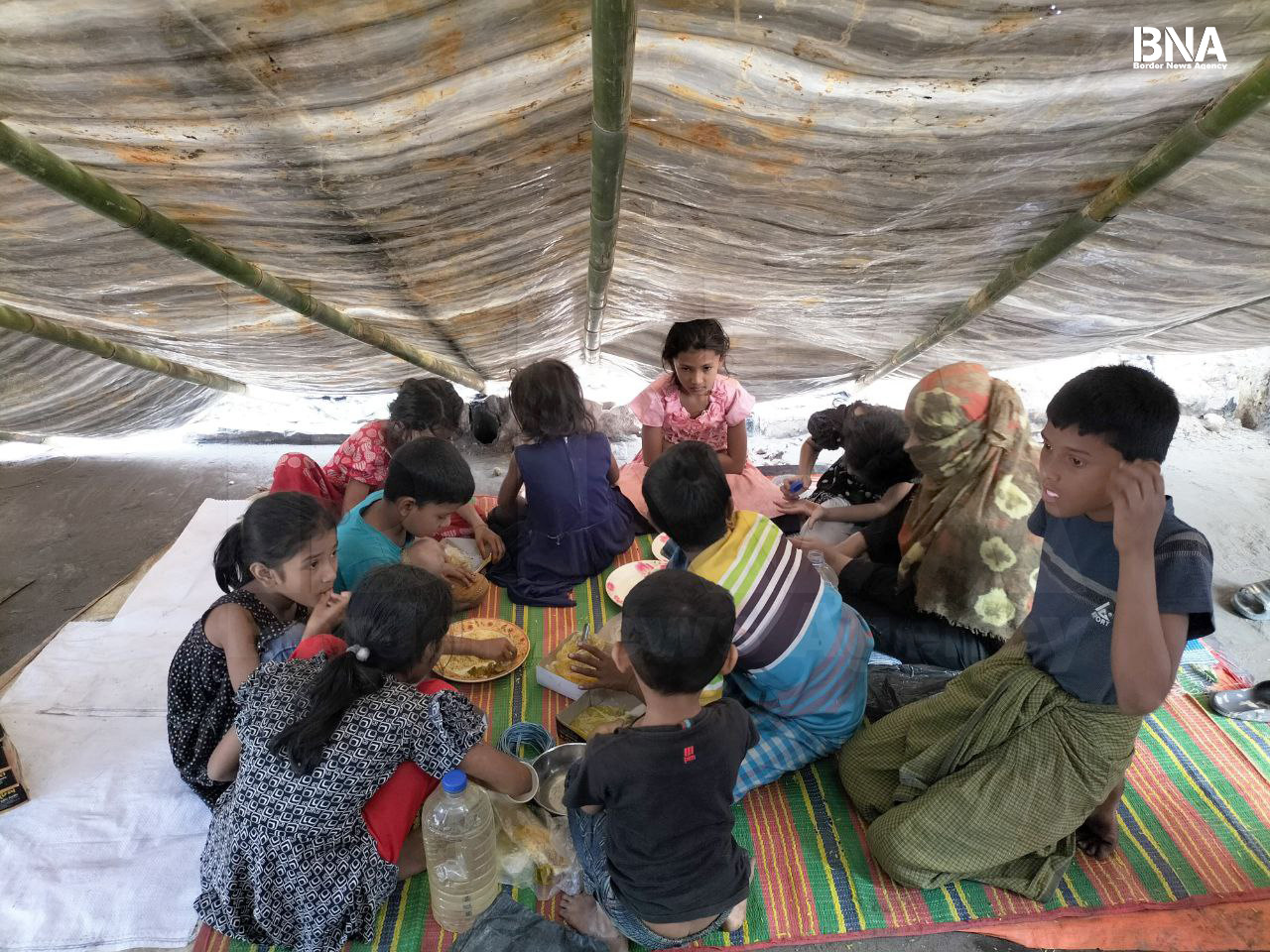

The number of severely malnourished Rohingya children in refugee camps has surged to its highest level since the mass displacement in 2017, with a 27% increase in cases requiring emergency treatment compared to last year, the United Nations Children’s Fund (UNICEF) has reported.
Currently, more than 15% of children in the camps are suffering from malnutrition, a crisis that threatens to push thousands into severe acute malnutrition, a life-threatening condition if left untreated.
“We are still able to provide essential healthcare and nutrition support to Rohingya mothers and children,” said Rana Flowers, UNICEF’s Representative in Bangladesh. “But with funding cuts and increasing needs, families are deeply worried about what will happen if food rations are further reduced, or critical nutrition programs are forced to stop.”
The Cox’s Bazar refugee settlements, home to over one million Rohingya refugees, including more than 500,000 children, are now facing an emergency-level malnutrition crisis, UNICEF declared on March 11.
In 2023, UNICEF provided life-saving treatment to nearly 12,000 children under five suffering from severe malnutrition, with a 92% recovery rate. However, without continued emergency support, many of these children remain at risk.
UNICEF estimates that in 2024, 14,200 Rohingya children will suffer from severe acute malnutrition, a number expected to rise due to food shortages, poor diet quality, lack of clean water, and limited access to healthcare.
If these children do not receive timely treatment, their risk of death is 11 times higher than that of well-nourished children of the same age, UNICEF warned.
The crisis is being exacerbated by funding shortages that have already led to cuts in food assistance for refugees. International aid agencies have repeatedly called for urgent donor support to sustain life-saving programs in the camps.
With resources dwindling, Rohingya families in Cox’s Bazar, the world’s largest refugee settlement, are growing increasingly desperate. Many fear that without intervention, the malnutrition crisis could spiral out of control, putting thousands of young lives in grave danger.
Humanitarian organizations are urging the international community to step up funding to prevent a worsening catastrophe. Without additional support, thousands of Rohingya children could face irreversible health consequences or even death.
As conditions in the camps deteriorate, UNICEF and its partners continue to work tirelessly to provide emergency nutrition services, but with funding uncertainties, the future remains bleak for thousands of Rohingya children struggling to survive.
UNICEF report: https://www.unicef.org/press-releases/geneva-palais-briefing-note-malnutrition-tightening-its-grip-children-rohingya