
Border News Agency
Dhaka, May 16, 2025
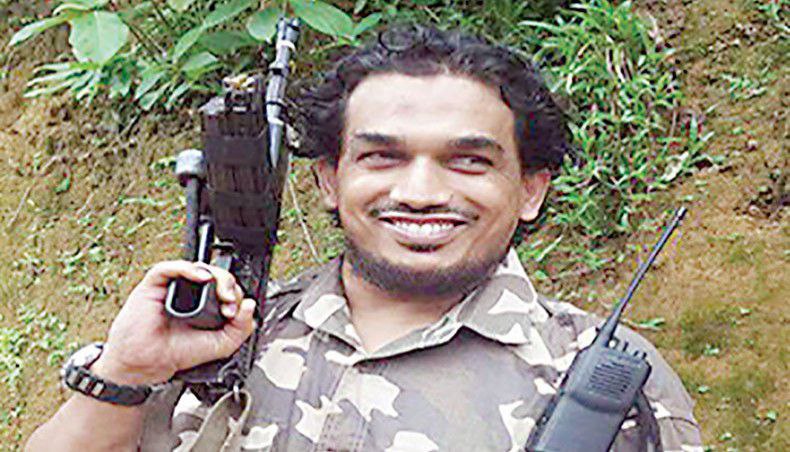
Ata Ullah, the leader of the Arakan Rohingya Salvation Army (ARSA), continues to draw international attention amid growing controversy over his role in the ongoing Rohingya crisis. While some consider him a resistance leader advocating for the rights of the stateless Rohingya people, others accuse him of contributing to the community’s suffering through violent tactics.
Originally believed to be born in Pakistan and raised in Saudi Arabia, Ata Ullah has long portrayed himself as a defender of the Rohingya cause. He emerged publicly in 2016 after ARSA carried out attacks on Myanmar security forces in Rakhine State, which triggered a brutal military crackdown resulting in the mass displacement of over 700,000 Rohingya to Bangladesh.
Recent reporting, including an op-ed by human rights researcher John Quinley III published in Dhaka Tribune, raises critical questions about Ata Ullah’s accountability. According to Quinley, ARSA’s activities in the refugee camps in Bangladesh including alleged involvement in killings, threats, and intimidation have made life more difficult for many Rohingya seeking safety and justice.
“While Ata Ullah and ARSA claim to fight for Rohingya rights and the restoration of citizenship in Myanmar, they must be held accountable for violations and abuses committed against their own people,” Quinley writes.
Despite ARSA’s assertion that they are engaged in a liberation struggle, human rights groups have urged authorities in Bangladesh and Myanmar, as well as international actors, to investigate alleged crimes committed by the group. Survivors and witnesses have accused ARSA of silencing dissent and targeting individuals opposed to their presence in the camps.
The Myanmar military, responsible for mass killings and systematic persecution of the Rohingya, remains the main aggressor in the crisis. However, the actions of ARSA further complicate the path to peace and justice for the Rohingya.
Human rights defenders stress that any future solution for the Rohingya must include accountabilities for all actors’ state and non-state alike who have contributed to the suffering of the community. As pressure mounts, the international community faces increasing calls to distinguish between legitimate resistance and criminality within the broader context of the Rohingya struggle.






Comments 2
Thank you for your sharing. I am worried that I lack creative ideas. It is your article that makes me full of hope. Thank you. But, I have a question, can you help me?
Can you be more specific about the content of your article? After reading it, I still have some doubts. Hope you can help me. https://accounts.binance.info/register-person?ref=JW3W4Y3A