
Border News Agency
Cox’s Bazar, August 13, 2025
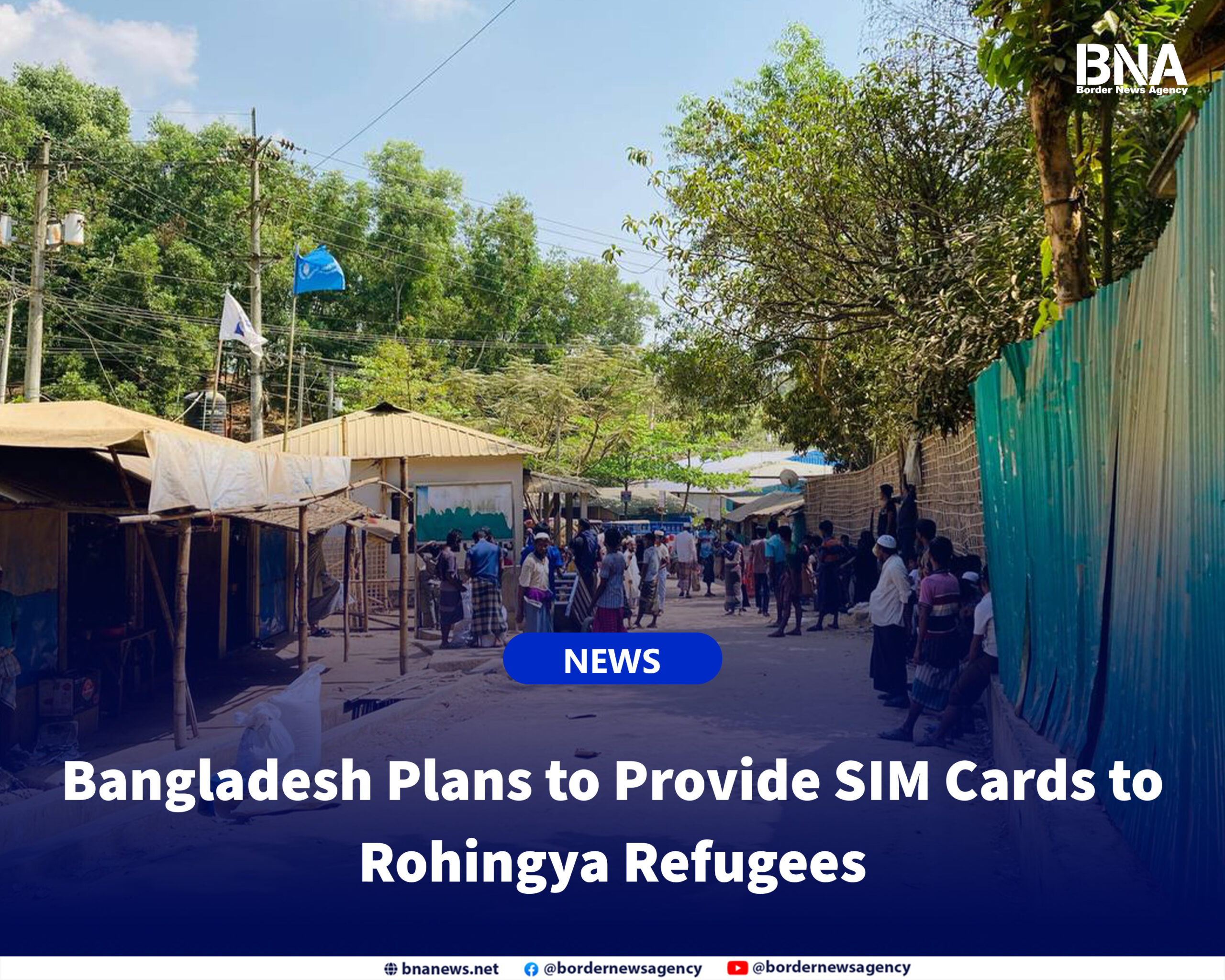
Bangladesh’s interim government is moving forward with plans to provide Rohingya refugees with legal access to SIM cards, aiming to address both humanitarian needs and security concerns.
For years, over 1.2 million Rohingyas in Cox’s Bazar have relied on illegally obtained Bangladeshi or Myanmar SIM cards, raising security risks. The Bangladesh Telecommunication Regulatory Commission (BTRC) recently held a meeting with four mobile operators to explore regulated distribution of SIM cards to the refugee population.
Chief Adviser Professor Muhammad Yunus is scheduled to visit the camps on August 25, when a pilot program for distributing 10,000 SIM cards through the Office of the Refugee Relief and Repatriation Commissioner (RRRC) is expected to begin. The cards would likely be issued via state-run Teletalk, with costs possibly covered by the UNHCR or the government.
Since Rohingyas lack national ID cards, authorities are considering the use of UNHCR “Progress IDs” for registration. The UNHCR database will be stored at the Bangladesh Computer Council’s data center, with a full handover of information anticipated in November.
Once the legal SIMs are issued, authorities plan to deactivate unauthorized cards registered under Bangladeshi IDs. Telecom operators have expressed mixed reactions, some welcoming the move for safer communication, others raising concerns about market impacts and registration complexities.
Experts have recommended designating the camps as special zones with restricted network access from Myanmar, alongside a systematic replacement of illegal SIMs.
The pilot rollout later this month is expected to test the feasibility of the plan and determine how it could be expanded to all Rohingya refugees in Bangladesh.




Comments 2
Your point of view caught my eye and was very interesting. Thanks. I have a question for you. https://www.binance.info/register?ref=IXBIAFVY
Mình thích những nơi giao diện đơn giản như hb88 đăng nhập , nhìn rất dễ chịu. TONY06-25