
Border News Agency
Cox’s Bazar12 August 2025
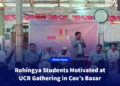
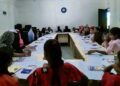
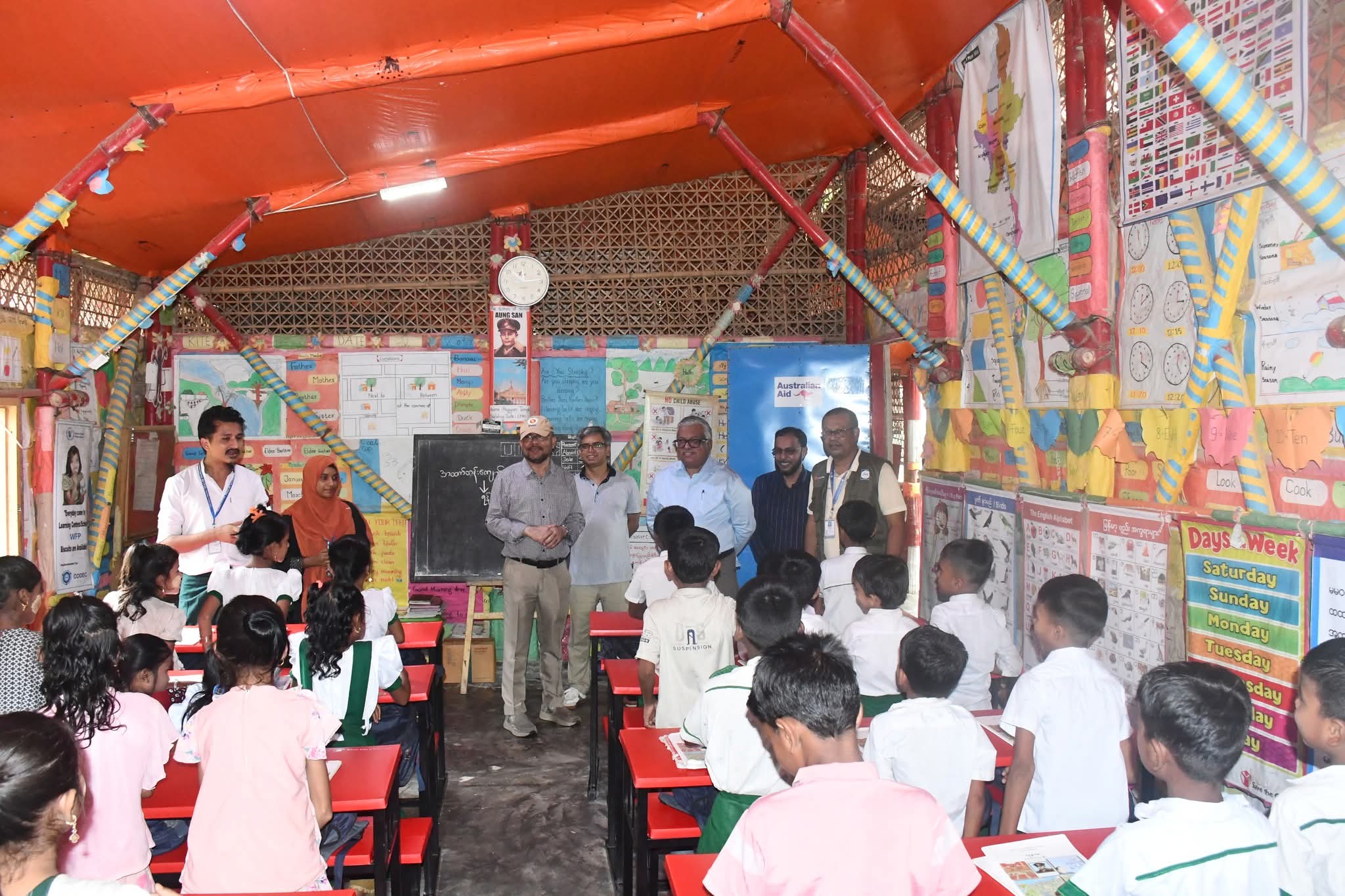
The newly formed Examination Board for Rohingya Refugees held its first official meeting today with the Refugee Relief and Repatriation Commissioner (RRRC) Mizanur Rahman to discuss the future of Rohingya education and its formal recognition within Bangladesh. The talks, held on 12 August 2025, focused on securing government approval for a community-led education system that protects Rohingya language, culture, Islamic studies, and history while adapting Myanmar’s secular education model through a Rohingya perspective.
During the meeting, the Board presented a set of key demands to the RRRC, including:
- Recognition of the Rohingya Examination Board and its education system.
- Allocation of common spaces for education.
- Safety and security for teachers and students.
- Access to digital skills and vocational training.
- Development of Rohingya language as part of the curriculum.
- Opportunities for higher education within or outside Bangladesh.
- Dignified repatriation with restoration of Rohingya identity.
- Leadership development within the community.
RRRC Mizanur Rahman praised the Board’s vision, noting that Bangladesh’s willingness to allow refugees to use their own curriculum was rare globally. He emphasised that any changes or recognitions must align with the country’s constitutional framework and receive government approval.
Community school leaders and headmasters present at the meeting expressed gratitude to both the Bangladesh government and RRRC for engaging directly with refugees and hearing their concerns.
Several organisers and leaders also shared their perspectives:
Khing Maung outlined the vision behind the Examination Board.
Mohammad Younus spoke on the mission to represent all community-based schools.
Ahesanul Haque praised the RRRC’s engagement.
Abdu Rahman confirmed plans to include Rohingya Zuban, history, culture, and Islamic studies in the curriculum.
Community Voices
Syedul Mostafa, a youth advocate, stressed the need for stronger support:
“Small support can keep Rohingya education alive. NGO-based educational centres are close to refugees, but with RRRC’s help, it would be better to combine efforts for common goals. Many students need at least six to eight hours of study a day to truly progress.”
Mayyu Islam highlighted the long-standing educational restrictions faced by Rohingya:
“Since 1990, we have been restricted from higher education as part of systematic dehumanisation. We request opportunities for university-level education, a midwife training centre in the camp, and skills training in digital technology and marketing to secure our future.”
Looking Ahead
This landmark meeting marks the first step toward formal dialogue between Rohingya educators and Bangladesh authorities. While RRRC’s response was cautious, the exchange opened a pathway for cooperation and underlined the urgent need for sustained investment in Rohingya education. The community hopes such efforts will prepare its youth for a dignified future both during their stay in Bangladesh and upon eventual return to Myanmar.