
Border News Agency
Dhaka – Sept 5, 2025
The plight of nearly one million Rohingya refugees in Bangladesh is once again drawing international attention, with calls intensifying for ASEAN to take decisive action as conditions in the sprawling Cox’s Bazar camps worsen.
Charles Santiago, Co-Chair of the ASEAN Parliamentarians for Human Rights (APHR) and former Malaysian MP, issued a stark reflection following a recent fact-finding mission, warning that ASEAN’s failure to act risks deepening instability across the region.
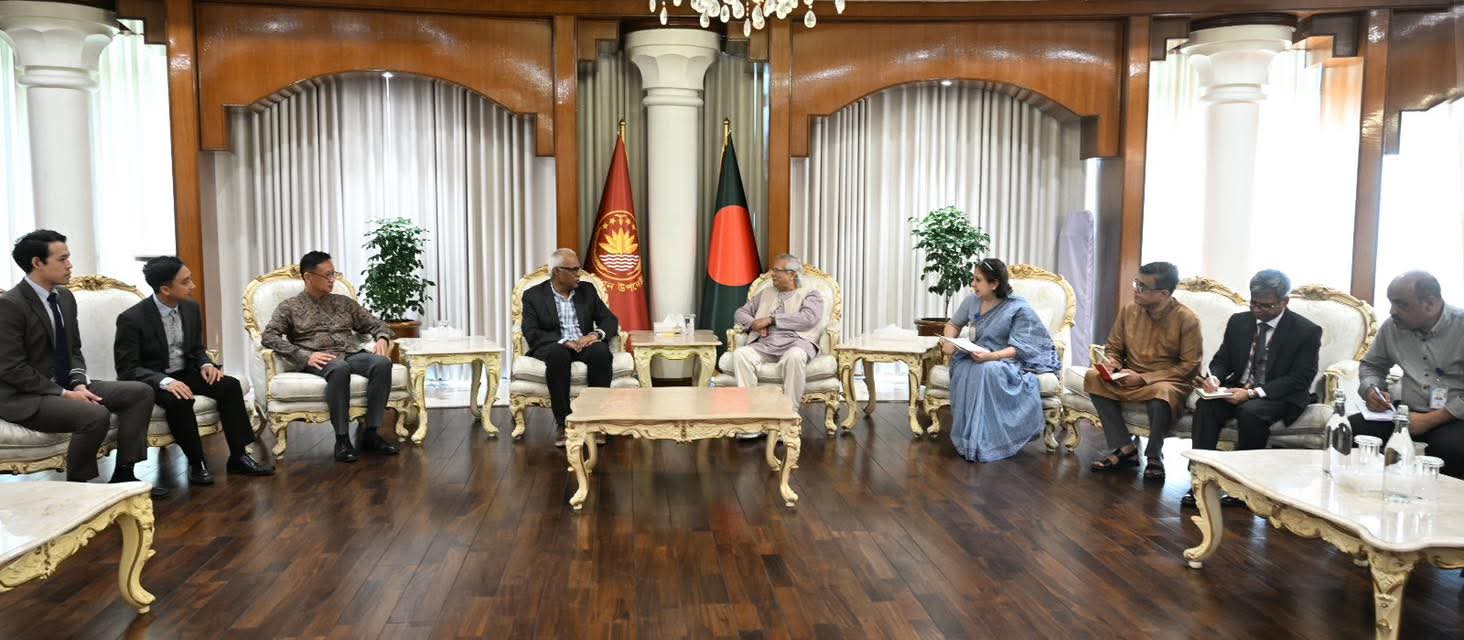
“The Rohingya crisis is ASEAN’s test of conscience. Every day that passes without action is another betrayal,” Santiago said, after visiting camps in Cox’s Bazar and meeting Bangladesh’s Chief Adviser, Nobel laureate Professor Muhammad Yunus.
During discussions in Dhaka, Professor Yunus urged ASEAN to move beyond rhetoric and take leadership in mobilizing political and humanitarian solutions. “Create a platform that does not exist, now. ASEAN must tell the world about the crisis we are facing,” he told the delegation.
In Cox’s Bazar, where nearly one million Rohingya have lived since fleeing Myanmar’s military crackdown in 2017, despair grows amid shrinking aid. The World Food Programme has warned that rations may run out after November 2025 unless $17 million is secured every month.
“Already, mothers are skipping meals so their children might eat. Hunger crouches in the camps like a waiting beast,” Santiago noted, describing the worsening humanitarian crisis.
Education remains another urgent concern. Makeshift schools staffed by volunteer teachers offer only limited learning opportunities, leaving children’s futures uncertain. “If we fail to provide accredited schooling, training, and higher education, that hope will rot into anger,” Santiago warned, urging ASEAN nations to follow the Philippines’ example in admitting Rohingya students.
Inside Myanmar, the situation for Rohingya has grown even more dire. A new conscription law forces Rohingya men and boys to join the same army that razed their villages, a move Santiago described as “a grotesque bargain: serve or die.”
Meanwhile, Bangladesh and Myanmar have signed an MoU on so-called “voluntary repatriation,” but human rights groups warn it amounts to coercion. “This is not return. This is coercion in the guise of diplomacy,” Santiago said.
Critics accuse ASEAN of hiding behind its long-standing policy of non-interference while the Myanmar junta entrenches its power and the bloc’s Five-Point Consensus on Myanmar remains stalled.
“Malaysia’s chairmanship is almost at its end, and what have we achieved? Villages continue to burn, the junta grows stronger, and ASEAN still worships silence over justice,” Santiago said.
He urged the creation of an ASEAN Humanitarian Fund and called for an ASEAN–Bangladesh–China summit to address the crisis with “political teeth.”
Bangladesh, which has sheltered Rohingya refugees for eight years, continues to shoulder an enormous burden. While Dhaka has repeatedly appealed for greater international support, the response has been inadequate.
“The cost of ASEAN’s inaction will be devastating: more drugs, more arms, more refugees flowing into the region,” Santiago warned.
Cox’s Bazar, he said, is more than just a refugee settlement. “It is a mirror that reflects both our failures and our possibilities,” he concluded.







Comments 1
Your point of view caught my eye and was very interesting. Thanks. I have a question for you.