

In the heart of the world’s largest refugee settlement, a quiet yet powerful movement is underway. Guided by international NGOs and humanitarian organizations, Rohingya volunteers in the camps of Cox’s Bazar are stepping up to tackle one of the most pressing challenges in the camps: waste management and sanitation.
The initiative, coordinated by several international NGOs working in the camps with support from UN agencies, has mobilized hundreds of Rohingya youth and community members. These volunteers are playing a critical role in cleaning the camps, collecting waste, unclogging drains, and raising awareness about hygiene among fellow refugees.
“This program is managed and supported by international agencies, but the real work is done by the Rohingya volunteers on the ground,” said Mahbub Alam, a camp-in-charge (CiC) representative in Camp 9. “They are the backbone of this effort.”
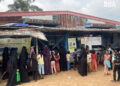
Every morning, the volunteers gather at designated points in the camp, wearing high-visibility vests and carrying tools provided by the NGOs brooms, gloves, buckets, spades, and wheelbarrows. In teams, they move through the maze-like paths of the camp, cleaning waste from the narrow alleyways, common toilets, and water points.
Abdus Salam, a 25-year-old volunteer from Camp 12, shared, “We work under the supervision of the NGO team, but we are proud to be part of this. It’s our home. If we don’t keep it clean, we suffer. We want to see our children grow up in a safe and healthy environment.”
The conditions in the camps make waste management a major concern. Overcrowding, poor drainage systems, and limited waste disposal infrastructure contribute to an environment where disease can spread rapidly.
During the rainy season, the situation worsens as stagnant water and overflowing latrines increase the risk of waterborne diseases such as cholera, diarrhea, and skin infections.
To address these risks, NGOs have developed structured waste management plans, dividing camps into sectors and assigning volunteer teams to each area. Alongside cleaning, the volunteers also participate in awareness campaigns, visiting households to educate families on proper waste disposal, personal hygiene, and the importance of using toilets and waste bins.
“We try to explain that throwing garbage in the road or near water sources affects everyone’s health,” said Rokeya Begum, 30, a female volunteer in Camp 8W.
“Sometimes people listen, sometimes they don’t. But we keep trying because change doesn’t come in one day.”
Female participation in the program has grown steadily, with international NGOs encouraging more women to join by creating safe working environments and providing gender-sensitive training. Many of the female volunteers focus on household outreach and awareness among women and children.
International humanitarian agencies have praised the impact of the volunteer program. “Rohingya volunteers are an essential part of our work,” said a WASH (Water, Sanitation, and Hygiene) specialist from an international NGO. “Without them, these efforts wouldn’t reach the scale or effectiveness we are seeing now. They understand the community’s language, culture, and challenges better than anyone.”
Despite the program’s success, challenges remain. Volunteers often work long hours in difficult conditions, with minimal financial incentives. The work is physically demanding and sometimes underappreciated. Some volunteers also express concerns about sustainability, wondering what will happen if external support decreases.
“There is still a long way to go,” said Jamal Uddin, a youth leader and supervisor in Camp 10. “We need more training, more tools, and continued support. But we are committed. This is not just cleaning this is saving lives.”
As international attention shifts and funding fluctuates, the role of community-led initiatives becomes more critical than ever. The dedication shown by the Rohingya volunteers is a powerful reminder that even in displacement, there is dignity in action and strength in community.
By taking the lead in keeping their environment clean, the Rohingya are not only protecting public health they are reclaiming agency over their own lives, and setting a vital example of resilience, solidarity, and self-help in one of the world’s most challenging humanitarian settings.





Comments 1
Tỷ lệ hoàn tiền có thể dao động từ 5% đến 10% tùy vào sự kiện trò cụ thể. asia slot365 login Điều này không chỉ giúp người tham gia giảm bớt áp lực khi thua cược mà còn tạo thêm cơ hội để họ quay lại các trận đấu giành chiến thắng. TONY12-26