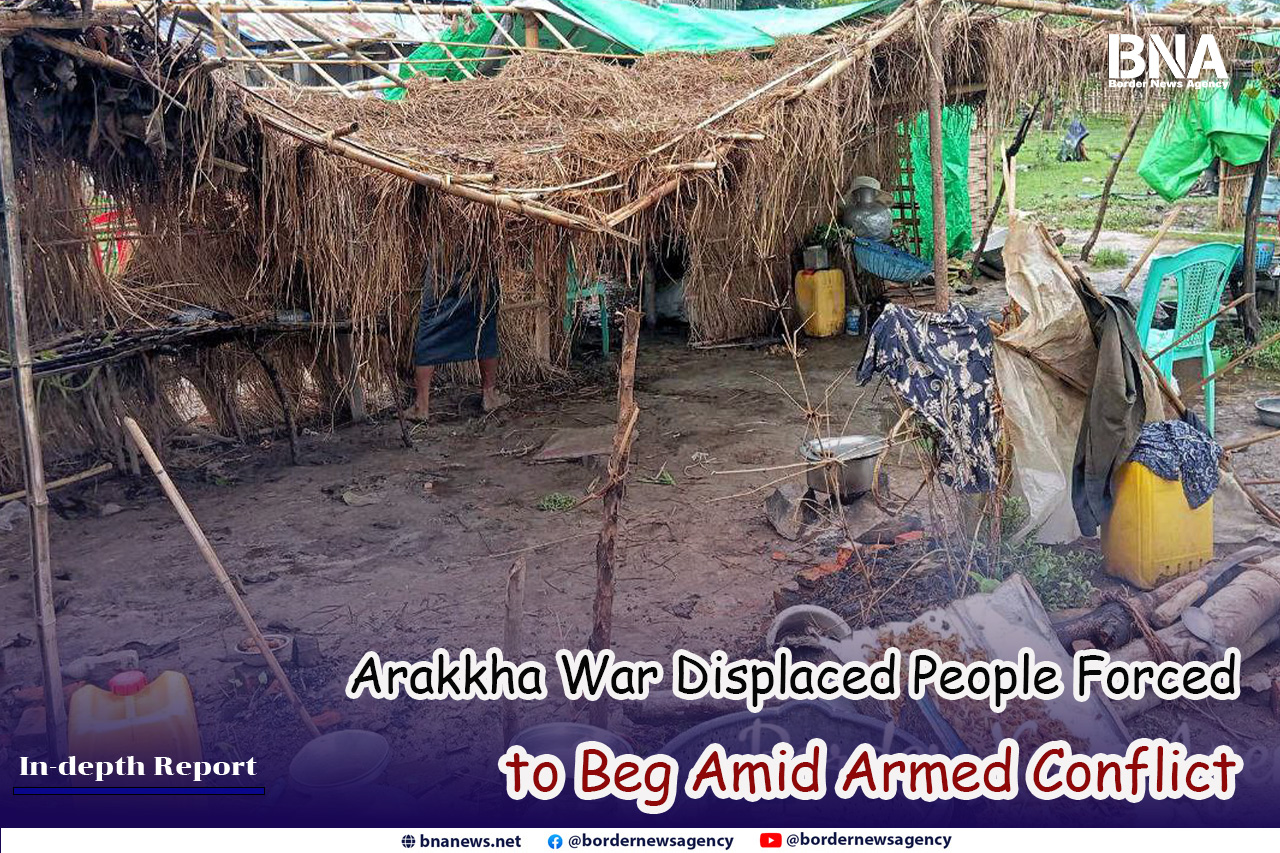

In-depth Report
Border News Agency
Kyauktaw, October 31
Armed Conflict
As part of Operation 1027, launched by the three allied groups, including the Arakkha Army (AA), the Arakkha Army began attacking and capturing military outposts of the military junta in the Arakkha region on November 13, 2023.
The Arakkha decisive battle will mark its third anniversary on November 13 this year. During this campaign, the Arakkha Army has completed its military offensives and taken control of 15 townships, including Paletwa Township.
In addition, it has established full control over the Arakkha–Bangladesh border and the Arakkha–India border, while developing administrative mechanisms under the Arakkha People’s Revolutionary Government.
Furthermore, the Humanitarian and Development Coordination Office (HDCO) of the United League of Arakan (ULA) has been working with international humanitarian organizations, civil society organizations, and charitable groups to provide assistance and humanitarian support to people displaced by the conflict.
However, Arakkha residents say that displaced people in areas controlled by the Arakkha Army are being forced to set aside their dignity and beg for food to survive starvation.
Although they have put aside their pride and resorted to begging to survive the hunger crisis, they can no longer find people willing to give them food every day. As a result, some have reportedly become unable to cope with hunger and have died by suicide or attempted suicide, according to Arakkha residents.
Arakkha residents also say that the families of some Arakkha Army (AA) members are among those struggling to survive by begging.
Trading Dignity for Survival
“Please, have mercy.”
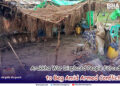
A woman in her thirties stands by the roadside, holding an infant in her arms.
The baby has no trousers, and the woman has no shoes on her feet. As she stands beside the road with her hand outstretched, asking passers-by for help, her face reflects exhaustion and anxiety about tomorrow more prominently than embarrassment.
According to Arakkha residents, such scenes have increasingly become common in recent times along the streets and near markets in towns controlled by the Arakkha Army.
A mother carrying a baby. An elderly person holding a small plastic bag. Children waiting by the roadside for something to eat.
All of them have been forced to put aside their dignity and beg to survive. Civil society organizations say this situation is the result of several overlapping factors, including armed conflict, a lack of employment opportunities, rising commodity prices, displacement from their homes, and declining incomes.
Arakkha residents say that although the number of people begging in areas controlled by the Arakkha Army decreased beginning in 2024, it has increased again in 2026.
Among those affected are displaced children, elderly people, and family members who have lost their employment opportunities, according to civil society assistance groups.
“In the past, no matter how difficult things became, people never resorted to begging like this. Now, they have reached the point where they must go out onto the streets and hold out their hands just to have enough to eat for one day,” a man involved in assisting displaced people told Border News Agency.
The Humanitarian and Development Coordination Office (HDCO) previously reported that there were approximately more than 500,000 displaced people in areas controlled by the Arakkha Army. However, the latest exact figure for the displaced population remains unknown.
A Problem Beyond Unemployment
Displaced people say that the livelihood crisis currently facing communities in areas controlled by the Arakkha Army is not caused solely by unemployment.
They say the problem has become more severe because military conditions have blocked routes to employment, trade and travel have been restricted, businesses have suspended operations, and the income people earn is no longer sufficient to cover their expenses.
A woman displaced from Sittwe said that when her family first rented a house in 2024, the monthly rent was only 150,000 kyats. From 2025 onward, it increased to 200,000 kyats, and it has now reached 400,000 kyats per month.
Displaced people also say that houses that previously rented for around 150,000 to 200,000 kyats per month now cost as much as 700,000 kyats.
Two-storey houses, meanwhile, reportedly rent for between 500,000 and 1.5 million kyats.
“On top of having to flee the conflict, house rents keep rising. We simply cannot afford them anymore. It has become difficult even to buy food, let alone pay the rent,” a woman displaced from Mrauk-U told Border News Agency.
Displaced people in Kyauktaw also say that even an ordinary house with a leaking roof and structural damage costs 300,000 kyats per month to rent.
According to displaced people, the growing number of tenants and their willingness to offer higher rents than other prospective renters have further driven up rental prices.
“The increase in rent is mainly because there are more people looking for houses. Since people are competing to rent houses, landlords have raised their prices,” a displaced man in Kyauktaw told Border News Agency.
Arakkha residents say landlords are also facing rising commodity prices and increasing house repair costs.
However, many displaced families have unstable incomes and cannot afford to pay the higher rents, they say.
Consequently, both landlords and tenants are facing difficulties, according to Arakkha residents.
“I have to raise the rent because my own expenses have increased. But I also sympathize with the displaced people and understand the difficulties they are facing,” said a male landlord in Mrauk-U.
Local residents are calling on the relevant administrative authorities to review rental prices and establish rates that are manageable for both landlords and tenants.
They also say that housing assistance and rental subsidies for people without homes could reduce the burden of finding a place to live.
Poverty Falls More Heavily on Women and Children
Amid the crisis, women and children have become particularly vulnerable groups.
When men who earn income for their families become ill, die, or lose the ability to work, women are left to shoulder the responsibility of providing for their families.
Instead of attending school, children are reportedly being forced to beg along the streets or take on small jobs in markets, according to people assisting displaced communities.
“Men have no jobs, and some have died. As a result, the women and children left behind in their families are the ones suffering the most,” a person assisting displaced people told Border News Agency.
Arakkha residents say that displaced people go from house to house begging, but sometimes they receive nothing even after visiting ten households.
Unable to continue enduring the hunger crisis, a woman who was supporting and providing for families displaced from Sittwe Township reportedly attempted suicide during the third week of October in Alay Than Kyaw Village, Maungdaw Township, according to local residents in Maungdaw.
Displaced people also say that when living conditions become extremely difficult, some women may be driven to choose ways of surviving that put their safety and dignity at risk.
Women’s rights activists say this should not be viewed merely as an individual choice. Instead, it should be understood as a consequence of the breakdown of employment opportunities, social protection, and security systems.
“If these crises continue for a long time, the situation could become extremely concerning for women and children, both socially and in terms of their physical safety,” a women’s rights activist warned.
Displaced people also say that some women who have been struggling to survive by setting aside their dignity amid the hunger crisis have ended up in prostitution.
Class Inequality During the Revolution
Although the Arakkha Army has captured and taken control of most towns during the Arakkha decisive battle, displaced people in areas under its control are still being forced to beg to survive.
However, Arakkha residents allege that some people involved in assisting displaced communities have become able to purchase and drive cars worth 300–400 million kyats, while some senior Arakkha Army officials have reportedly accumulated wealth worth tens of billions of kyats.
Arakkha residents also say that some young girls among the displaced population have become victims of human trafficking and that some have subsequently ended up in prostitution.
Furthermore, although the military junta frequently launches airstrikes against areas controlled by the Arakkha Army, Arakkha residents say that the number of KTV establishments, massage parlours, and bars has increased, while various kinds of drugs are being sold and used.
Displaced people say that some ULA/AA officials have also criticized and spoken harshly to displaced people who beg for food.
The displaced people have to walk long distances from displacement camps to other places to beg. When they ask passing vehicles for a ride, most drivers reportedly refuse to take them, according to displaced people.
In addition, displaced people who want to travel to other towns to beg must obtain travel authorization documents from the people in charge of displacement camps appointed by the United League of Arakan (ULA). If they return after the authorized period has expired, they reportedly face verbal abuse from camp officials.
Because they have repeatedly been displaced by the conflict, many of these people have no permanent place to live. They are forced to stay wherever they can, including beside roads and near forests, according to displaced people.
As a result, displaced women are not only suffering from hunger but are also deprived of dignity and safety. They are experiencing both physical and psychological insecurity, displaced people say.
Humanitarian Crisis
According to a report by the United Nations Development Programme (UNDP), more than two-thirds of the population in Rakhine are experiencing multidimensional poverty.
The report states that the loss of regular employment, insecurity, and economic restrictions are pushing local residents into increasingly severe poverty.
The military junta is carrying out near-daily airstrikes against areas controlled by the Arakkha Army and is also attempting to launch counteroffensives to retake those areas.
As a result, fighting between the military junta and the Arakkha Army has intensified. People have been displaced again by airstrikes, naval attacks, and artillery shelling in numerous areas, including Sittwe, Kyaukphyu, Ponnagyun, Rathedaung, and Pauktaw.
“When the airstrikes began, we could no longer stay in our village, so we fled. We could not bring anything with us. Now, we are struggling every day just to survive in the displacement camp,” said a man from Pauktaw who was displaced by airstrikes.
Displaced people in townships including Ponnagyun, Kyauktaw, Taungup, Mrauk-U, and Kyaukphyu urgently need food and basic necessities.
In addition, shortages of goods and rising prices have made it increasingly difficult for them to meet their daily living needs, according to people assisting displaced communities.
“The assistance is far too little compared with what is needed. We are facing situations where even food has become scarce,” a person assisting displaced people in Kyaukphyu Township told Border News Agency.
Arakkha residents also say that restrictions imposed on displaced people’s freedom of movement and their ability to work, justified on security grounds during the conflict, have worsened the hunger crisis. They further allege that international humanitarian organizations have not been officially permitted to enter and provide assistance in areas controlled by the Arakkha Army.
More Assistance Is Needed
In areas controlled by the Arakkha Army, the Arakkha People’s Revolutionary Government has been expanding administrative mechanisms and public services, including healthcare and education.
However, civil society organizations say that the assistance provided remains insufficient to meet current needs and that long-term solutions are necessary.
Human rights activists emphasize that temporarily providing donations is not enough to reduce the number of people forced to beg for food after setting aside their dignity to survive the hunger crisis.
They say it is necessary to restore safe livelihood opportunities for displaced people and other economically disadvantaged communities, resume agricultural and fishing activities, and reopen markets and trade routes.
They also say that housing assistance and rental support must be provided to displaced people, children must receive protection and continued access to education, and women must be offered safe employment opportunities that enable them to earn an income.
“To solve this problem, humanitarian assistance alone is not enough. We also need to restore the channels through which the regional economy can function again,” said an Arakkha man studying social sciences in Thailand.
Human rights activists say that ensuring humanitarian assistance reaches civilians, including displaced people, and prioritizing civilian safety are essential.
They warn that as long as assistance remains difficult to deliver, the number of mothers begging by the roadside, children who do not have enough to eat, and displaced people without shelter may continue to increase.
Arakkha residents say that displaced people and other economically disadvantaged communities in areas controlled by the Arakkha Army are not begging because they do not want to work.
“ULA/AA should make greater diplomatic efforts. They should seek a political way out and do more to ensure that displaced people receive assistance. Even if the revolution succeeds while the people are starving, it will not bring much political benefit,” a former member of parliament told Border News Agency.
People assisting displaced communities say that these individuals are struggling because they have lost places where they could work, lack the freedom to travel safely, and can no longer earn enough to cover their living expenses.
The voices saying “Please, have mercy” along the streets of towns controlled by the Arakkha Army are not merely individual pleas for help. According to women’s rights activists, they also represent the voices of an entire Arakkha population trapped between armed conflict and poverty.
“The displaced are starving to death while those fighting the war are becoming wealthy. That is not a revolution. Displaced women are being driven into prostitution while revolutionary leaders end up owning KTV businesses. That is not a revolution either,” a women’s rights activist told Border News Agency.
Women’s rights activists say that it is not enough simply to hear these voices momentarily and then move on. Long-term plans are needed to address the reasons behind the crisis, enable civilians to resume their livelihoods safely, and protect children from being forced onto the streets.
As the crisis in areas controlled by the Arakkha Army continues to deepen, the number of people forced to beg for food may continue to rise. Humanitarian assistance and accountable action to address the crisis are therefore urgently needed.