
By Htun Lin
In-depth Analysis
Border News Agency
Mrauk-U, November 13.
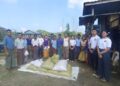
(Photo: Until July 2023, the organization was referred to as the Rakhine People’s Authority. / BNA)
The Arakkha People’s Revolutionary Government
On November 13, 2023, as part of Operation 1027 launched by the Three Brotherhood Alliance, which includes the Arakkha Army (AA), the Arakkha Army began attacking and capturing military junta bases in the Arakkha region.
Today, November 13, marks the third anniversary of that decisive war in Arakkha. During the conflict, the Arakkha Army successfully captured and established control over 15 townships, including Paletwa Township.
In addition, it has established full control over the Arakkha–Bangladesh and Arakkha–India borders and has been developing administrative mechanisms as the Arakkha People’s Revolutionary Government.
The Arakkha Army began establishing administrative operations in Arakkha as early as around 2019 and 2020, when it first gained control over certain areas. These operations expanded further in 2021 and 2022, following the military coup, as the administrative reach of the military junta began to shrink.
Initially, administrative affairs under the Rakhine People’s Authority were handled only by local area administrators and Arakkha Army personnel. As a result, the system was not well organized. It was only after the complete capture of towns that a more systematic administrative structure began to emerge, with the formation of central, district, township, area, ward, and village-tract administrative bodies.
The Arakkha People’s Revolutionary Government had previously used the name Rakhine People’s Authority (Arakan People’s Authority) until the decisive war in Arakkha began. In November 2023, when the decisive war started, it changed its name to the Arakkha People’s Government (Arakan People’s Government).
In 2025, the word “Revolutionary” was officially added to the name, and the organization began using the title Arakkha People’s Revolutionary Government.
Under the Arakkha People’s Revolutionary Government, the United League of Arakan (ULA) serves as the political party, while the Arakkha Army (AA) serves as its military wing, as the Arakkha Army leader once explained during a private meeting with Arakkha journalists.
At the district and township administrative offices of the Arakkha People’s Revolutionary Government, graduates of the Arakkha Public Policy and Administration School, known as ASPPA, have been given key positions. It is also observed that many of them are young people who applied to join from the civilian community.
The Arakkha People’s Revolutionary Government has established various departments necessary for a government, including those responsible for administration, the judiciary, taxation and revenue collection, as well as education, healthcare, and agriculture.
Since it is being built as a government during a revolutionary period in which the military conflict has not yet ended, the process faces numerous difficulties and challenges. The people of Arakkha may understand and accept that there are still shortcomings and gaps in the system.
However, taking responsibility and being accountable to the people are unavoidable duties of any government.
Beyond Territorial Control
The expansion of the Arakkha People’s Revolutionary Government’s administrative machinery, including its ability to establish courts, tax collection systems, and various departments, indicates that it has moved beyond military operations and is now taking on practical responsibilities for governing the territories under its control.
However, controlling territory does not yet prove that an authority is responsible and accountable to the people.
As the collection of taxes from local residents, the exercise of judicial power, and the making of security-related decisions become increasingly common, questions are also becoming more important: How is this authority being exercised? Who will be held accountable when mistakes occur? And how can the public question those in power?
For the people of Arakkha, the main question at this point is no longer how much territory the Arakkha Army has managed to control.
Rather, the question is how effectively the administrative authority that has emerged alongside the Arakkha Army’s territorial control can be used for the benefit of the people.
Another important question is how effectively the authorities can respond to questions raised by local residents about the exercise of that power.
On this basis, it has become necessary to examine the Arakkha People’s Revolutionary Government’s responsibilities in administration, the judiciary, taxation and finance, security, public freedoms, minority rights, and humanitarian affairs.
Responsibilities Arising Alongside De Facto Governing Authority
(Photo: In 2026, the word “Revolutionary” was officially incorporated into the name Arakkha People’s Revolutionary Government. / BNA)
When discussing the United League of Arakan/Arakkha Army (ULA/AA) as a de facto governing authority, the most important point is that authority and responsibility cannot be separated.
Being an internationally recognized government and exercising actual administrative authority over a territory are not the same thing.
However, once an organization gains the power to make decisions affecting people’s daily lives, freedoms, economic activities, and access to justice within a territory, those exercising that power also acquire responsibilities toward the people.
In situations of armed conflict, both governments and non-state armed groups are required to comply with the applicable international humanitarian law.
Furthermore, an organization exercising governing authority must also consider its responsibilities for public security, basic services, justice, and accountability for the exercise of its power.
“ULA/AA cannot establish strong sovereignty simply by winning battles. By gaining control over Paletwa and 14 townships in Rakhine, it has transitioned from being a revolutionary organization to becoming a de facto government. Therefore, it is now essential to demonstrate a stronger accountability system to ensure the rule of law regardless of ethnicity or religion, protect human rights, and prevent abuses of power,” said a freelance lawyer from Anjanapura Township, pointing out that the expansion of ULA/AA’s governing authority makes it increasingly necessary to strengthen its accountability mechanisms.
This assessment is an important point for understanding the current situation of the Arakkha People’s Revolutionary Government.
Military success can lead to territorial control, but administrative success depends on how effectively people’s trust and rights can be protected.
The Judiciary: A System on Which the Public Relies and Its Remaining Weaknesses
The judiciary is one of the most important sectors for assessing the implementation of governance by the Arakkha People’s Revolutionary Government.
The United League of Arakan/Arakkha Army (ULA/AA) officially announced the establishment of its own judicial system in areas under its control in 2021. However, judicial activities had already been implemented on the ground even before that announcement.
The court system is led by civilian judges, while legislative authority is placed under the Central Executive Committee (CEC).
Arakkha lawyers say that this judicial system has become a major channel for resolving legal cases.
“When it comes to the judiciary in Rakhine State, the ULA court system handles more than 80 percent of cases across the entire state. There have been instances when courts had to operate from temporary locations for security reasons. The main reason for relocating them has been the threat of airstrikes,” said a lawyer from Kyauktaw Township, explaining that the ULA court system has become a major judicial channel for local residents.
It is evident that the Arakkha judicial mechanism has moved beyond military territorial control and has become directly connected to the daily social lives of local residents.
In addition, some people who have personally experienced cases have confirmed to Border News Agency that corruption exists among certain employees of the Arakkha People’s Revolutionary Government, including prosecutors, judges, and judicial staff.
During a private meeting with Arakkha journalists, Arakkha Army (AA) Commander-in-Chief General Twan Mrat Naing previously acknowledged that a district-level judge had been suspended and disciplined over corruption.
General Twan Mrat Naing also acknowledged and explained that Mya Htun Aung was serving as the Chief Justice of the Arakkha People’s Revolutionary Government. Following the disciplinary action and suspension of a district-level judge, there was no other judge readily available to immediately replace that official.
At the invitation of Arakkha Chief Justice Mya Htun Aung, the entire editorial team of Border News Agency visited and observed the court where the Chief Justice was based. Border News Agency has also been able to examine cases, including court judgments submitted by litigants.
As a result, limitations have been observed in human resources, infrastructure, and material resources within the Arakkha judicial system, along with weaknesses in judicial transparency.
Court proceedings have been delayed because cases take a long time to resolve and lawyers are frequently reassigned.
In addition, members of the Arakkha legal community have pointed out that weak cooperation between the Arakkha People’s Revolutionary Government’s Department of Law Enforcement and Public Security (DLEPS) and the Arakkha judicial department has affected the effectiveness of the judicial system.
Consequently, in August 2026, the Arakkha People’s Revolutionary Government began establishing a special court to handle serious criminal cases, including sexual offenses against children, murder, and homicide.
However, establishing courts and ensuring full access to justice are not the same thing.
When assessing the quality of a judicial system, it is also necessary to consider the independence of judges, the right to appeal, the right to hire a lawyer, the right to a fair hearing, and the possibility of reviewing judicial decisions.
“Based on my own experience, I can generally say that there is justice in ULA/AA courts. People are allowed to hire lawyers from outside. If they cannot afford to hire an outside lawyer, a government lawyer will represent them. If someone is dissatisfied with a township court’s decision, they can continue pursuing the case at the district court or central court. The costs are also relatively low. However, when airstrikes occur continuously, cases can take longer to resolve,” said a person from a village in Anjanapura Township who had previously been involved in a land ownership case, describing the fairness of the Arakkha courts based on personal experience.
However, in land confiscation cases near Poangdut Village in Mrauk-U Township, landowners have reportedly not received compensation in accordance with land confiscation laws. There have also been reports of arrests, interrogations, threats, and coercion. In addition, family members confirmed that a private tuition teacher from a village in Anjanapura Township, who had posted on social media about a land ownership dispute in the village, had been arrested on charges of bringing the state into disrepute.
Furthermore, original landowners from Kyauktaw, Myebon, and Ann townships have submitted evidence to Border News Agency, reporting that land cases in those areas have been decided corruptly.
Residents of Arakkha have also confirmed that some rape cases have resulted in wrongful judgments and punishments without DNA testing, while in other cases, decisions have allegedly favored family members of judicial staff.
Therefore, it has become increasingly important for the Arakkha People’s Revolutionary Government to publish information about court proceedings more transparently, appropriately separate judicial and administrative powers, and strengthen channels through which the public can submit complaints and appeals.
Taxation: A Financial Resource for Governance or a Burden on the People?
Financial resources are essential for the survival and operation of any administrative system.
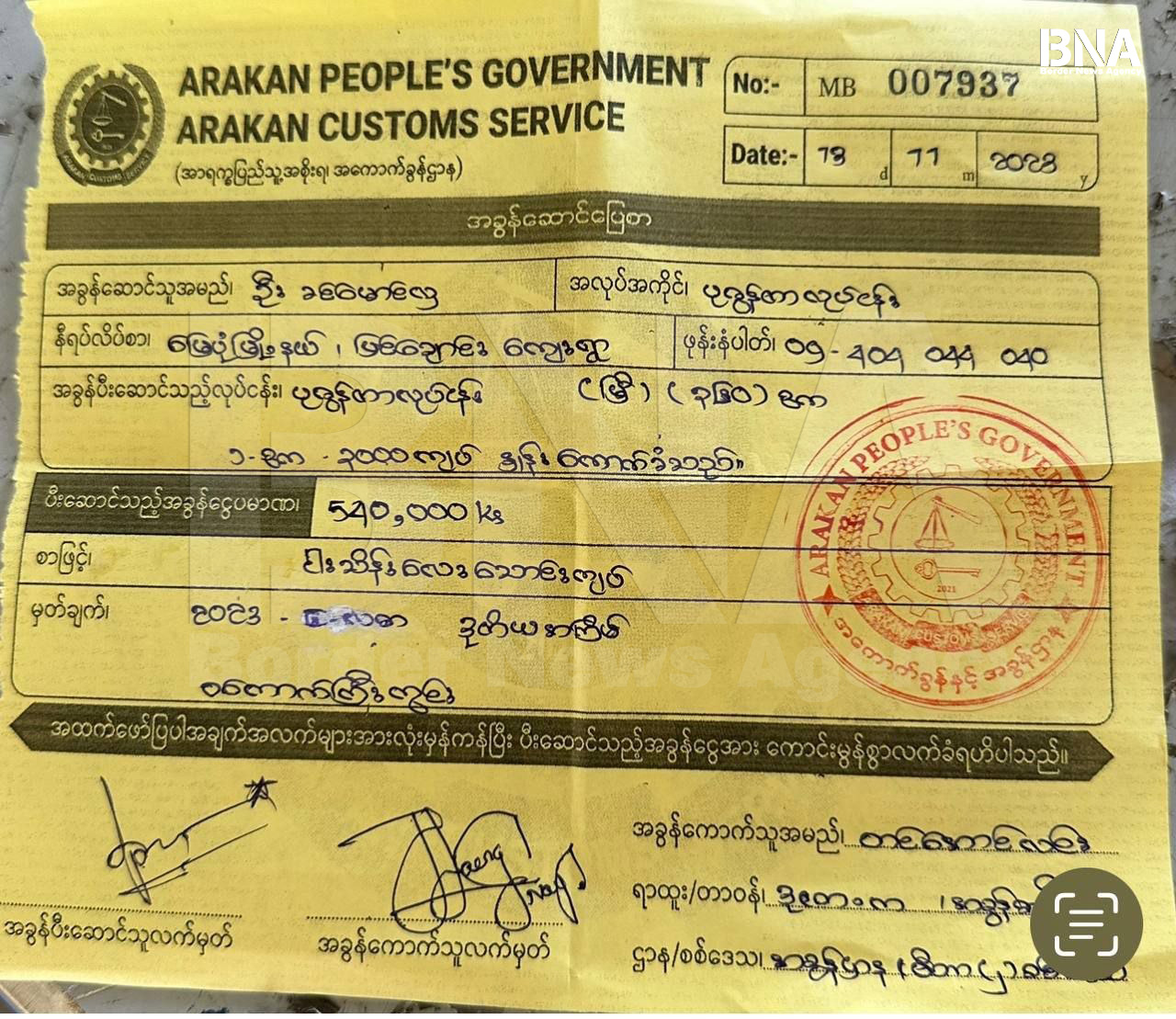
The Arakkha People’s Revolutionary Government has also established tax departments at the central, district, and township levels and is collecting various taxes and fees.
At the township level, taxes are being collected on municipal property, trade and the transportation of goods, as well as vehicle licensing.
However, basic food items are allowed to be imported duty-free, while alcoholic beverages are subject to taxes of up to 50 percent, according to people involved in importing and selling alcohol.
“ULA/AA does not collect taxes on every imported product. Basic food items such as cooking oil, salt, chilies, and onions are allowed to be imported without paying taxes. However, alcoholic beverages are subject to taxes of up to 50 percent,” said an alcohol importer and seller from Kyauktaw Township.
Exempting basic food items from taxes can be viewed as a policy intended to reduce food shortages and rising commodity prices.
However, taxation should not be considered merely a way for an administration to generate revenue. It is also necessary to examine how taxation affects the people.
“We are not saying that ULA/AA’s administration should be criticized. A tax system is one of the main sources of revenue for any government. However, in a crisis-ridden situation like Rakhine, high taxes do not directly affect traders. They simply increase prices and pass the tax costs on to consumers. As a result, this places an additional burden on ordinary people,” said U Kyaing Thar Tun, a schoolteacher and political observer from Myebon Township, analyzing how the burden resulting from increased taxes may ultimately fall on ordinary people.
The United League of Arakan/Arakkha Army (ULA/AA) had been collecting taxes and fees even before the decisive war in Arakkha. However, local residents who experienced these transactions firsthand explained that some of the taxes and fees previously collected are no longer being recognized.
Residents have pointed out that although taxes were collected on land transactions in areas controlled by the Arakkha Army, the Arakkha People’s Revolutionary Government has failed to recognize those previous tax payments or take responsibility for resolving the matter when it subsequently forcibly confiscates the same land.
In addition, residents confirmed that although fees of up to 1 million kyats were collected as technology charges to allow public access to Starlink internet services, the authorities have not provided technological assistance to the people. Instead, they have reportedly controlled and confiscated publicly owned Starlink internet services and increased monthly taxes.
Therefore, residents of Arakkha are calling for greater transparency in the taxation system of the Arakkha People’s Revolutionary Government. They say that the government should officially disclose to the public how much revenue has been collected and how the funds have been spent.
“Collecting taxes is not simply about demonstrating that an administration has governing authority. In fact, taxation can be considered a social contract between the people and the governing authority. There have been improvements in the ULA’s tax collection system. However, what the people want to know is where and how the money collected through taxes is being spent. Another important question is who audits local budgets and tax revenues, and how independent and trustworthy those audits are,” said U Htun Tauk, a political and economic analyst in the Arakkha region, emphasizing the need to view taxation as a social contract between the people and the governing authority.
This analysis raises a key question concerning the financial accountability of the Arakkha People’s Revolutionary Government.
The ability to collect taxes and fees may demonstrate the financial capacity of an administrative system. However, if the public cannot know where the money is being spent, how much is being allocated to public services, and who is auditing the accounts, financial accountability cannot be considered complete.
Therefore, the Arakkha People’s Revolutionary Government needs to publish its tax collection rules, revenue figures, and expenditures so that the public can access this information. It also needs to establish a system under which independent audit organizations can examine the budget and demonstrate how tax revenues are being used to provide public services.
Although collecting taxes and fees is one way of demonstrating governing authority, how the collected funds are spent will reveal more clearly the extent to which that authority is accountable to the people.
Security: Responsibilities Between Territorial Defense and Public Safety
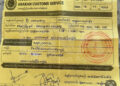
(Photo: A document from the District Land Management Committee concerning a land dispute. / BNA)
Security is one of the key areas of responsibility in the administration of the Arakkha People’s Revolutionary Government.
However, under the current circumstances in territories controlled by the Arakkha Army, security issues cannot be separated from the military council’s airstrikes, artillery shelling, and armed clashes.
Throughout 2026, civilian casualties, displacement, and damage to infrastructure have continued in most townships controlled by the Arakkha Army due to airstrikes, artillery attacks, and drone strikes.
In particular, airstrikes targeting the temporary maternity hospital and schools in Mrauk-U, the market in Kyauktaw, and displacement camps in Ponnagyun Township have clearly demonstrated the impact of the armed conflict on civilians.
Under these circumstances, while the Arakkha Army is responsible for defending the territory militarily, the United League of Arakan, as the governing authority, must also fulfill its administrative responsibilities to ensure the security and meet the basic needs of people living in areas under its control.
Public safety does not simply mean being able to control and defend territory militarily.
It also includes ensuring that people can travel freely, protecting civilian infrastructure, providing access to emergency healthcare services, and enabling humanitarian assistance to reach those in need.
“Actually, what we local residents hope for is more than just having the AA control our territory. We want to escape the life of constantly fearing for our lives every day, wondering at night whether we will hear aircraft or whether bombs will be dropped from the air. When the military bombs hospitals and markets, we are afraid to go anywhere, and we are suffering because we cannot freely trade or even obtain basic food supplies. It is good that the AA is working to clear the territory of enemy forces, but for us civilians, what is even more important is to receive practical protection from airstrike threats, along with emergency medical supplies and food assistance,” said a person displaced by the conflict from Ponnagyun Township who is currently taking refuge in Myebon, explaining that local residents’ practical expectations go beyond territorial control.
This statement highlights the gap between military success and public safety.
Whether the Arakkha Army has the military capability to prevent these airstrikes is a separate question of military capacity. However, warning civilians in advance of airstrike threats, carrying out emergency rescue operations, and providing medical supplies and food assistance are directly related to administrative preparedness and capacity.
Therefore, security needs to be assessed not only by the extent of military territorial control but also by how effectively people’s daily lives and their safety can be protected.
Public Livelihoods and Administrative Responsibilities Amid Economic Blockades
In assessing the administrative capacity of the Arakkha People’s Revolutionary Government, it is also necessary to take into account the blockades imposed by the military junta and the economic conditions across all territories controlled by the Arakkha Army.
Since November 2023, when the decisive war in Arakkha began, the flow of goods into the Arakkha region, as well as travel and communication routes, have been blocked. This has resulted in shortages of food, fuel, medicine, cash, electricity, and communication services.
Rising commodity prices and declining employment opportunities have further worsened the livelihood conditions of internally displaced people and local residents.
According to statements by the United Nations and international humanitarian organizations, approximately two million people in Rakhine State—or more than half of its population—are facing severe food shortages and the risk of famine.
This situation has created an administrative crisis for the Arakkha People’s Revolutionary Government. On the one hand, the administrative machinery requires financial revenue to function. On the other hand, local residents’ incomes are declining while their daily living expenses continue to rise.
Under these circumstances, taxation and public services can no longer be considered separately.
Administrative authorities collecting taxes from the public need to demonstrate more clearly what services they are providing to the people through the revenue collected.
In particular, controlling commodity prices, ensuring the availability of basic food supplies, providing healthcare and education services, and creating employment and livelihood opportunities have become important responsibilities of the administration.
Although external blockades may limit the capacity of administrative authorities to act, their ability to formulate policies that minimize the burden on the public under such circumstances is one measure of the quality of governance.
Recruitment and Public Freedom of Movement: Balancing Military Necessities with Human Rights
In examining the administration of the Arakkha People’s Revolutionary Government, issues concerning recruitment and people’s freedom of movement must also be taken into account.
As military operations intensified, the United League of Arakan/Arakkha Army (ULA/AA) began implementing the National Defense Emergency Provision (NDEP) program to tighten administration and territorial control.
Under this program, young people within designated age groups are required to register for military service. Restrictions have also been imposed on young people living in areas controlled by the Arakkha Army regarding their ability to travel outside the region or abroad.
Although this program may be based on military needs related to territorial defense and manpower recruitment, it also has the potential to affect people’s freedom of movement, educational opportunities, and livelihood prospects.
In particular, for young people who wish to relocate to safer areas because of the military council’s conscription law, airstrikes, and other military threats, restrictions on travel may increase families’ concerns about their security and future.
The alleged forced recruitment by the Arakkha Army of underage schoolboys and schoolgirls, Indigenous people, minorities, and young women in territories under its control has caused the international community to lose confidence in the Arakkha Army’s revolution and raised questions concerning possible human rights violations.
Parents and family members have confirmed that the Arakkha Army has been forcibly recruiting underage schoolboys and schoolgirls, Indigenous people, minorities, and young women.
However, when examining the tensions between military necessity and public freedom, it is also necessary to distinguish between those who voluntarily attend military training and those who are forcibly recruited.
On the other hand, there are also young men and women who have voluntarily attended military training to support the United League of Arakan/Arakkha Army (ULA/AA). Among them are young people from the Mro, Chin, and Muslim (Rohingya) communities.
A military emergency may provide grounds for certain restrictions, but it does not grant unlimited authority to restrict public rights. Emergency measures must also comply with the standards of necessity, proportionality, and accountability.
Minorities: Can Equal Governance Be Demonstrated in Practice?
The quality of governance by the Arakkha People’s Revolutionary Government cannot be judged solely from the perspective of the Rakhine majority.
In territories controlled by the Arakkha Army, communities including the Chin, Khami, Maramagyi, Kaman, Daingnet, Thet, Mro, and Muslim communities live alongside the Rakhine people.
Therefore, when measuring the success of the Arakkha People’s Revolutionary Government, it is necessary to consider how effectively it protects the rights of all people, regardless of ethnicity or religion.
Since 2024, the United League of Arakan/Arakkha Army (ULA/AA) has made efforts to promote reconciliation with Muslim communities. These efforts have included changes to freedom of movement in central Rakhine and Paletwa, as well as the establishment of Muslim Affairs Councils at the township level.
These actions can be viewed as efforts to improve relations with minority communities.
However, it is necessary to distinguish between statements announcing reconciliation and the actual realization of equal rights on the ground.
For example, do minorities receive equal treatment in the judicial system? Do they have the right to representation in administrative decisions? Is there discrimination in security and freedom-of-movement policies? Do they have equal access to education and healthcare services? These questions need to be examined against actual conditions.
A policy promising equal rights regardless of ethnicity or religion is important. However, the credibility of governance will ultimately depend on whether that policy can be implemented in practice.
In particular, there must be channels through which the voices, experiences, and views of minority communities regarding the administration can be heard.
It is more important for minority communities themselves to be able to say that they are actually enjoying their rights than for administrative authorities simply to declare that minorities have rights.
Whether Indigenous peoples and minorities are granted land ownership rights in accordance with their traditional land-management practices, and whether minority armed security forces are allowed to be established and operate independently, are among the issues the international community will monitor and assess when evaluating equal rights for minorities.
Humanitarian Assistance: The Sector Most Severely Testing Administrative Responsibilities
Under the current conditions in territories controlled by the Arakkha Army, humanitarian responsibility is particularly important in assessing the quality of public administration.
According to UNHCR data as of June 2026, approximately 498,800 internally displaced people (IDPs) are living in Rakhine State, accounting for around 13.1 percent of the total IDP population nationwide.
This figure illustrates the enormous scale of humanitarian needs in Arakkha. Food, clean water, medicine, healthcare, shelter, and education are basic necessities during wartime.
Although the Arakkha People’s Revolutionary Government has been making efforts to support local aid operations, the military junta’s blockades have created difficulties for international assistance to reach the region.
However, external obstacles cannot completely absolve the administration of its responsibilities. The more difficult it becomes for aid to enter, the greater the need for administrative authorities to cooperate with humanitarian organizations.
In particular, it is the administration’s responsibility to ensure that aid is distributed according to need and without discrimination, to prevent inequalities between those who receive assistance and those who do not, and to prioritize the needs of vulnerable groups.
Furthermore, there must be transparent management of which organizations distribute international humanitarian assistance, where it is distributed, and how the distribution is carried out.
It is also necessary to manage transparently whether the assistance actually reaches those who need it and whether there are mechanisms through which complaints about its distribution can be submitted.
International humanitarian assistance should not be viewed merely as aid dependent on the goodwill of an administrative body. Rather, it should be regarded as part of the responsibility to protect people’s basic needs and rights.
Weaknesses in Accountability: Who Will Hold Those in Power to Account?
One of the biggest questions concerning the administrative system of the Arakkha People’s Revolutionary Government is the extent to which mechanisms exist to scrutinize the exercise of power.
The political system of the United League of Arakan/Arakkha Army (ULA/AA) operates as a one-party political system, with centralized control playing a dominant role in the military, political, and administrative sectors.
The fact that legislative authority rests with the Central Executive Committee (CEC), without elected representatives, also raises questions about public representation and accountability.
During wartime, it may be necessary to make emergency decisions and centralize administrative authority.
However, questions about how long such powers will continue to be exercised, when they will be reviewed, and who will oversee their use must also be addressed.
Although administrative authority is intended to serve the public interest, it may be difficult to reduce the risk of abuse of power if there is no system for scrutinizing those who exercise that authority.
The ULA’s establishment of online platforms such as “Justice for Arakan” can be viewed as an effort to increase transparency.
However, the practical usefulness of these platforms may be limited in areas where internet access and communications are difficult.
Furthermore, publishing information cannot replace an entire accountability system.
There is a need for mechanisms through which the public can file complaints, institutions that can independently investigate those complaints, procedures for reviewing decisions made by authorities, and systems for auditing and overseeing public finances.
In particular, systems must be established to determine how crimes, abuses of power, and human rights violations committed by administrative officials and security personnel will be investigated, who will take action, and how remedies will be provided to those affected.
These issues are becoming important criteria for determining the quality of governance of the Arakkha People’s Revolutionary Government.
Responsibility and Accountability: Governance Can Succeed Only When Both Go Hand in Hand
(Photo: List of cases to be heard personally by Arakkha Chief Justice Mya Htun Aung / BNA)
A comprehensive assessment of the current situation shows that the United League of Arakan is no longer an organization without an administrative structure.
It has been able to establish courts, tax collection systems, revenue departments, and security and administrative mechanisms. It has also become involved in humanitarian operations.
These developments demonstrate that the United League of Arakan is now taking on administrative responsibilities in practice.
However, the existence of administrative mechanisms does not yet prove that they are being used effectively for the benefit of the public.
At this point, it is necessary to distinguish between Responsibility and Accountability.
Responsibility means providing services to the public, ensuring security, making arrangements to deliver justice, and carrying out administrative duties.
Accountability, on the other hand, concerns how those responsibilities have been carried out, the reasons behind decisions, who will be held responsible when mistakes or abuses of power occur, and how the public can question those in authority.
Although mechanisms for fulfilling responsibilities are gradually becoming more visible within the current administrative structure of the Arakkha People’s Revolutionary Government, challenges concerning accountability remain to be addressed.
The major challenges include one-party centralized control, limitations on legislative authority, weaknesses in judicial human resources and resources, transparency in taxation and public finance, minority rights and public freedoms, freedom of the media, and the freedom of civil society organizations to operate independently.
To address these challenges, it is not enough merely to establish administrative mechanisms. It is also necessary to guarantee that the public can freely question, file complaints against, and scrutinize those mechanisms.
The Quality of Governance Is Becoming More Important Than Military Success
The Arakkha Army’s Rakhita pathway is intended to achieve self-governance and self-determination for the people of Arakkha.
Through military successes, it has been able to expand territorial control in pursuit of this goal, while also establishing administrative mechanisms.
However, controlling territory and gaining the trust of the people are not the same thing.
The existence of courts, the ability to collect taxes, and the establishment of administrative departments demonstrate progress in building an administrative structure. Nevertheless, it remains necessary to separately assess how effectively these mechanisms are operating in the public interest.
In particular, judicial independence, transparency in taxation and public finance, public freedoms, minority rights, and mechanisms for holding those responsible for abuses of power accountable will become the key criteria determining the quality of governance of the Arakkha People’s Revolutionary Government.
The military junta’s blockades, airstrikes, and ongoing armed conflicts have severely constrained the administrative capacity of the Arakkha People’s Revolutionary Government.
Therefore, not all current administrative weaknesses should be assessed solely on the basis of the Arakkha People’s Revolutionary Government’s own capacity. At the same time, external obstacles cannot be used as a reason to disregard the need for accountability to the public.
In reality, for a revolutionary organization, capturing territory may represent an achievement. However, the quality of governance will ultimately be determined by its ability to protect the lives, property, rights, and freedoms of all people living in those territories, regardless of ethnicity or religion; to exercise power transparently; and to respond to questions raised by the public.
Therefore, the next challenge for the Arakkha People’s Revolutionary Government is no longer simply to continue expanding territorial control. It is now to use governing authority responsibly for the benefit of the public and to establish a system through which those exercising that authority can be held accountable before the people.
Ultimately, the future of Arakkha will not be determined solely by how much territory has been brought under control.
It will also depend on how much fair governance has been established for the people living in those territories and how effectively those in power can be held accountable.
Territorial control can demonstrate governing authority, but only the ability to use that authority for the public good and to remain accountable before the people can determine the true quality of governance.