
Interview
Border News Agency
Maungdaw, November 22.
Following the International Court of Justice (ICJ) ruling that Myanmar committed genocide against the Rohingya, various perspectives and assessments have emerged regarding security, repatriation, and the political situation in the Arakkha region.
Although judicial and administrative systems are being established during the current transitional period, efforts to develop a comprehensive and robust legal framework are still underway, while concerns remain within the region.
A female civil society activist shared her views on these issues with Border News Agency.
The ICJ ruling is an important step forward from the perspective of international law and justice. However, we will have to wait and see how effective it will be in practice, particularly in terms of implementation on the ground and amid the complex political situation.
In principle, repatriation should be accepted from a humanitarian perspective. However, it would be difficult to support it without a systematic screening and verification process and a mechanism that can provide guarantees addressing the concerns of the Rakhine people.
Only by building trust between the two communities can a sustainable, long-term solution be achieved.
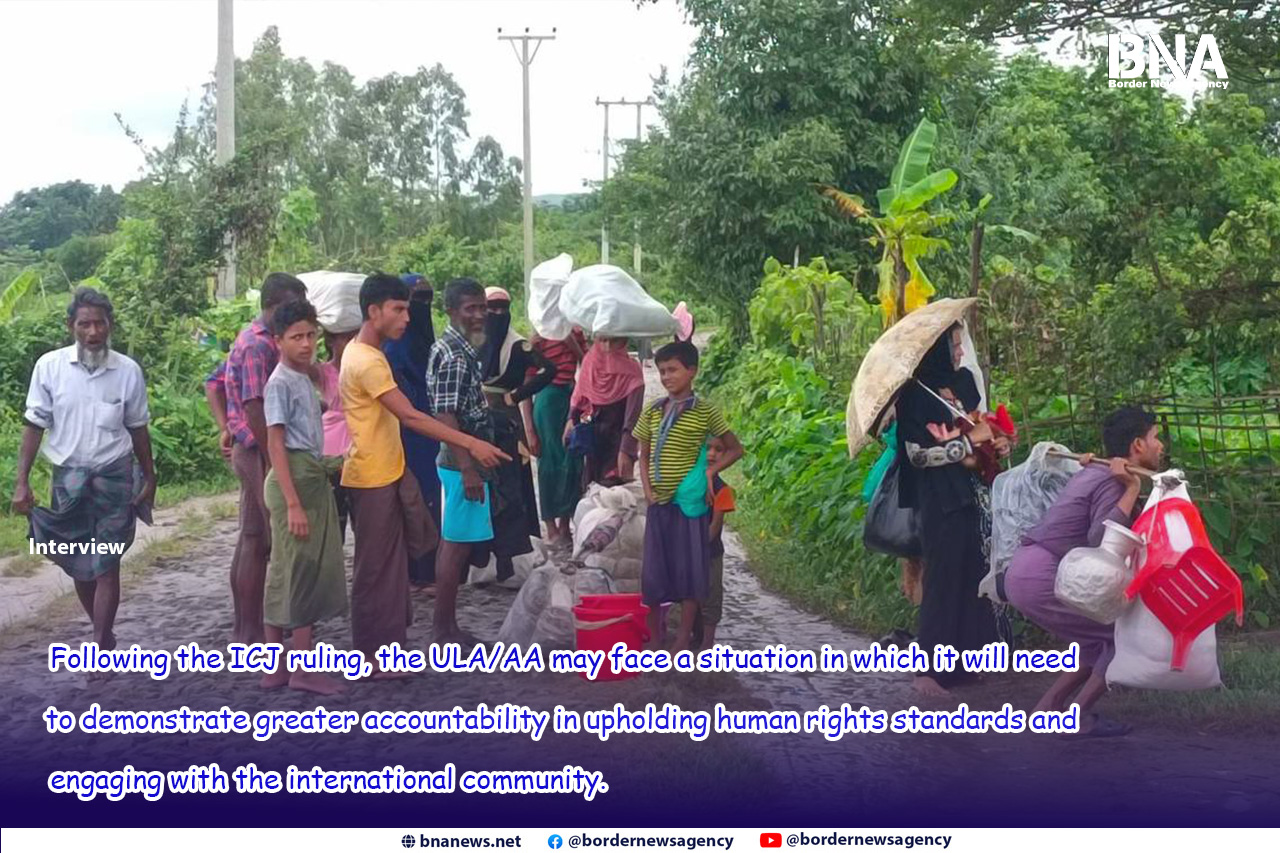
International scrutiny and pressure on the region may increase. This could put the ULA/AA in a position where it needs to demonstrate greater accountability in upholding human rights standards and engaging with the international community.
Although the ULA/AA says it is establishing judicial and administrative systems without discrimination based on ethnicity or religion, a comprehensive and robust legal framework has yet to be fully developed.
Since this is a transitional period, these processes are still underway and remain at an early stage.
Concerns remain. In addition to the ongoing armed conflict, we are particularly concerned about the possibility of further problems arising from incitement along ethnic and religious lines and political exploitation. We are therefore closely monitoring the situation.