
Border News Agency
Kyauktaw, November 22.
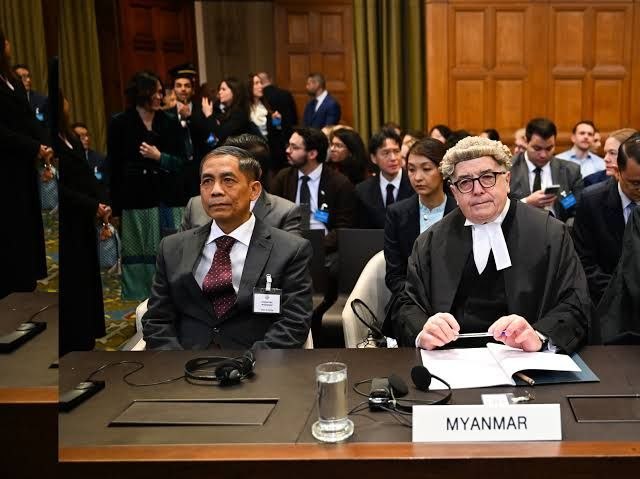
Arakanese people are concerned that ethnic conflicts could erupt again in the Arakan region following the International Court of Justice (ICJ) ruling on the genocide of the Rohingya people.
Amid ongoing military conflicts in the region, disruptions to the flow of goods, a shortage of employment opportunities, and growing livelihood difficulties, Arakanese people have warned that new conflicts could emerge as a result of external interference and incitement by third-party groups.
“We are afraid that social and economic pressures caused by unemployment, hunger, and disruptions to the flow of goods could lead to renewed communal conflicts,” said Ma Hla May, a young woman involved in assisting and rescuing displaced people, in an interview with Border News Agency.
They also said that particular vigilance is necessary as historical grievances and social tensions in the region remain unresolved, with the possibility of divisive incitement along ethnic and religious lines and political exploitation.
“I believe there is always a possibility of new conflicts emerging due to incitement by external actors and third-party groups. The Arakanese people need to remain vigilant and maintain unity,” said U Kyaw Zan, a community elder from the Arakan region, to Border News Agency.
Observers of Arakan affairs have also noted that the social cohesion policies of the Arakan Army (ULA/AA), which currently controls the territory, and local awareness-raising efforts are crucial to preventing renewed ethnic conflicts amid nationwide instability and multidimensional crises.
The Arakan Army currently controls most townships in the region, including Maungdaw, Buthidaung, and Rathedaung, where the Rohingya genocide took place.