
Interview
Border News Agency
Maungdaw, November 23
Following the International Court of Justice (ICJ) ruling that Myanmar committed genocide against the Rohingya, some observers say immediate repatriation to Arakan is unrealistic, as the region has yet to achieve stability.
Arakanese people are also concerned that further social conflicts could emerge amid regional instability, economic hardship, and difficulties in meeting basic livelihood needs.
La May, a young woman involved in humanitarian assistance and relief for displaced people, shared her views on the issue with Border News Agency.
“Regardless of what decisions are made at the international level, I want greater attention to be paid to the safety and livelihoods of Arakanese people who are bearing the brunt of the war on the ground. I am concerned that these rulings may amount to little more than superficial political pressure.
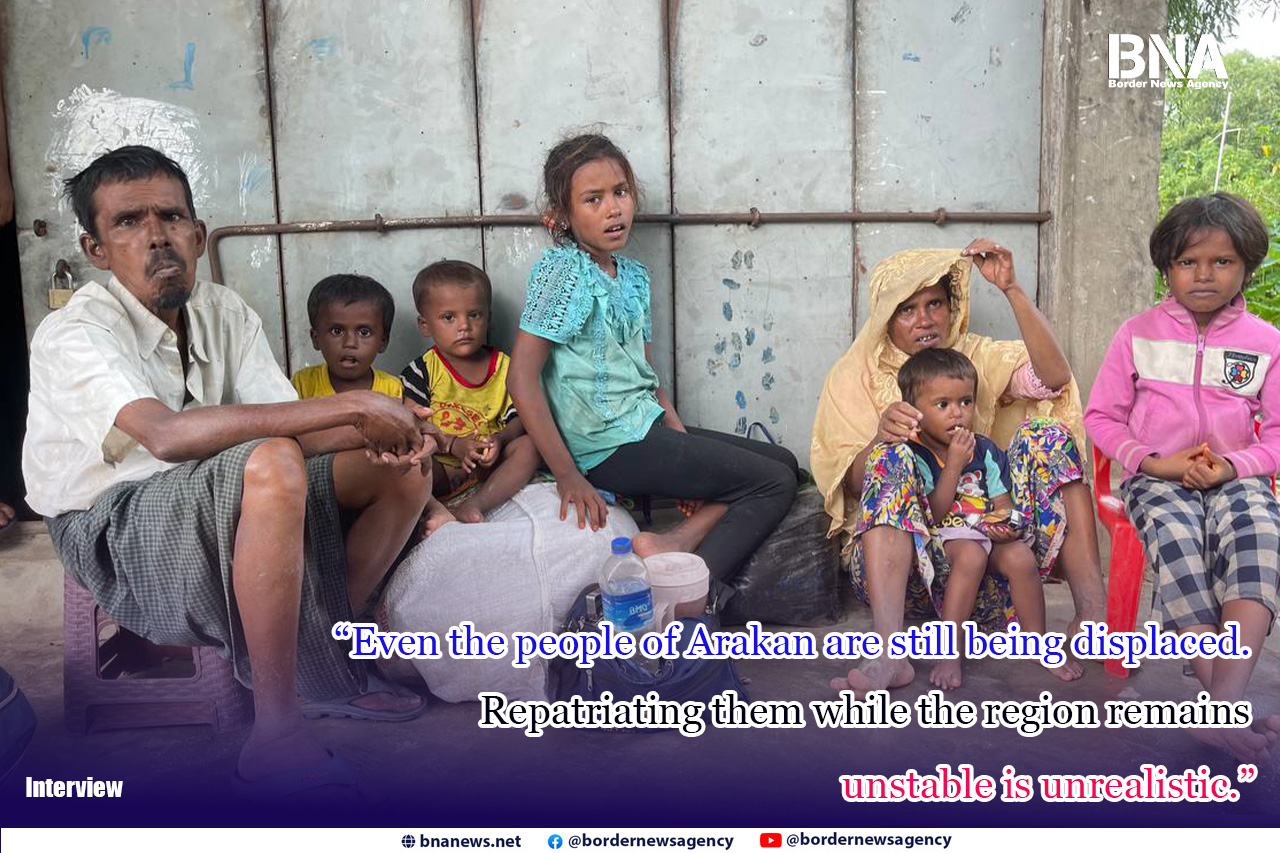
“At present, even local ethnic Arakanese people themselves are still being forced to flee their homes because of the impacts of the war.
“Under these circumstances, immediate repatriation without systematic preparations and before regional stability has been achieved is unrealistic and could also place an additional burden on local communities.
“Political tensions could increase further. In particular, feelings of insecurity among local residents could intensify, while mutual suspicion could grow.
“Rather than formal laws being officially enacted, what we have seen so far are administrative procedures aimed at preventing problems at the local governance level. Establishing long-term laws that include all communities will still take time.
“I am extremely concerned. I fear that socioeconomic pressures caused by a lack of employment, hunger, and disruptions to the flow of goods in the region could lead to further communal conflicts.”