
Interview
Border News Agency
Mrauk-U, November 26
Amid ongoing conflict and crises, women continue to face gender-based violence (GBV) and violence against women (VAW), while perpetrators often escape accountability. Daw Nyo Aye shared her views on these issues with Border News Agency.
“Based on my own observations in conflict-affected areas, cases of rape have increased since 2021 compared to previous years.
There has also been an increase in child rape cases, as well as a continuous rise in deaths related to violence. Even recently, in Ann Township, an elderly man, around 70 years old, reportedly raped a woman with a disability. The incident continued for an extended period before it was finally reported.
I have heard that the man has now been arrested and is being investigated.
At present, I can no longer participate directly in these cases. This is because I am getting older, and I am no longer physically able to travel or move around as I used to. Instead, I provide advice and guidance by phone and continue supporting the work remotely.
However, our women’s organizations are still doing a great deal of work at the grassroots level. I regularly talk with women about the importance of the rule of law. But even when five cases are reported, we have to make enormous efforts just to get three of them before the courts.
There are many challenges. In the past, I worked on issues that involved considerable risks and difficulties. But in the current situation, fear has increasingly taken hold of people.
Another deeply worrying issue is the breakdown of families. For example, a husband may be killed in an explosion, leaving his wife alone to support and raise their children. At a time when food is already scarce and providing for the family has become extremely difficult, women are forced to go outside and work to earn a living.
During these circumstances, they become exposed to various dangers.
From my perspective, rather than seeing the rule of law being properly upheld, I have increasingly witnessed people using whatever power they have close at hand.
We have been documenting and compiling data on cases involving the unlawful exercise and abuse of power.
Why are these things happening? Among those working in positions of authority at the local level are members of the military and the police, as well as people involved in local administration. These include not only men but also many women.
Even women working within these institutions have come forward with complaints of their own. This shows just how serious and challenging the situation has become. I have witnessed these difficulties firsthand.
Even when women survivors struggle to report their cases, seek justice, and bring perpetrators before the courts, we continue to hear reports of perpetrators escaping from detention, breaking out of custody, or being released.
In some cases, we have also seen death sentences handed down. Those decisions are encouraging. However, speaking frankly, people are afraid of those who hold power close to them. Because of this fear, many do not dare to speak openly.
In such an environment, we have to find ways to speak out and offer recommendations despite the fear surrounding us. I do not say this to blame anyone.
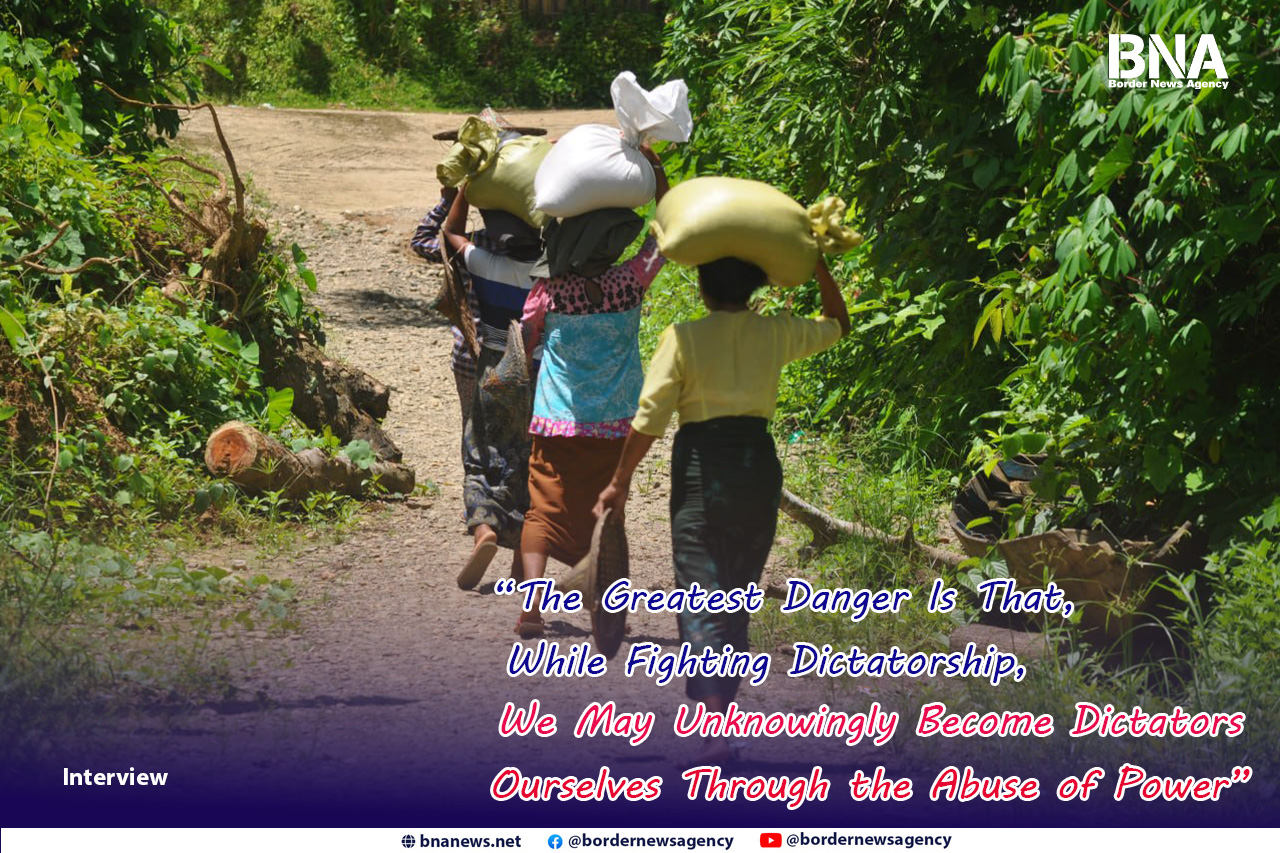
But we are fighting against dictatorship. There is one thing I want to emphasize: if, while fighting against dictatorship, we unknowingly begin abusing power ourselves and turn into dictators, then our society has reached one of its highest levels of danger and concern.
That is the message I want to convey.”