
Interview
Border News Agency
Kyauktaw, November 26
Daw Ma Khin Lay spoke to Border News Agency about weaknesses in existing laws and policies, as well as measures needed to effectively prevent and reduce gender-based violence (GBV) during periods of conflict.
“During the period of political openness, women’s organizations and civil society groups made efforts to pass the Prevention of Violence Against Women Law (PoVAW). However, when the military seized power in 2021, the law was never enacted.
After the military coup, existing laws and policies became even weaker and gradually broke down. At the same time, changing attitudes within society remains difficult because of barriers related to education, economic conditions, and deeply rooted traditional beliefs and practices.
In conflict-affected areas like these, the problem is not simply the lack of legal protection. The administrative systems responsible for implementing laws and regulations are also weak. Mechanisms for responsibility, accountability, and access to justice are equally lacking.
People in positions of power and armed organizations often believe that they are unlikely to face punishment for their abuses. This culture of impunity encourages further crimes.
GBV is often viewed only as a women’s issue. In reality, however, it is both a human rights violation and a public safety issue that affects women, children, men, and the LGBTIQ community.
Survivors often find it difficult to report incidents because they fear social stigma, public blame, security risks, and economic hardship. Reliable reporting channels and systems to ensure confidentiality and protection are also still lacking.
In revolutionary-controlled areas and the central Myanmar regions, there is a need for clear policies prohibiting GBV, effective response procedures, and mechanisms to take prompt action against perpetrators.
Survivors must also be provided with healthcare, psychological support, legal assistance, and safe accommodation.
Women’s meaningful participation in administrative bodies and decision-making positions must be strengthened. Perpetrators must be held equally accountable, regardless of which organization they belong to or what position they hold.
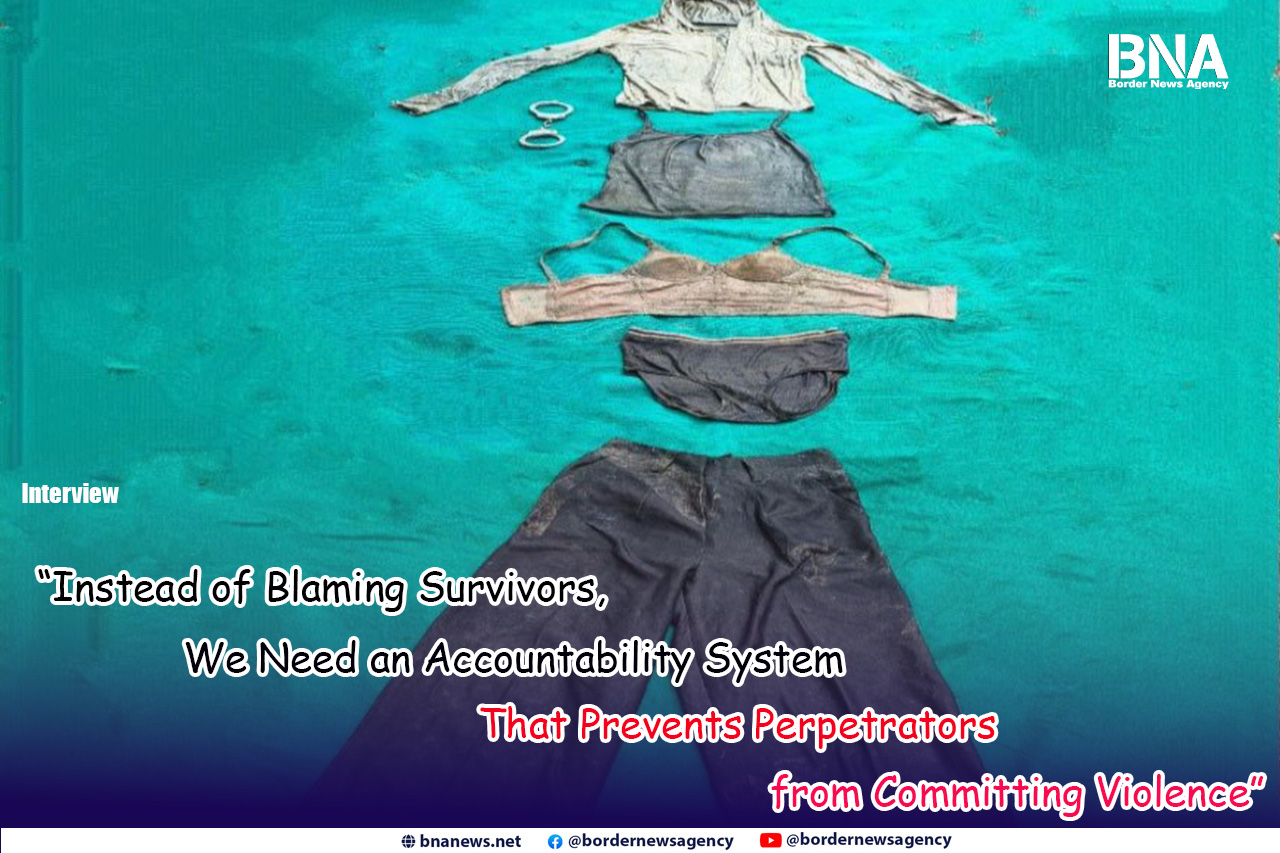
To prevent violence, we need to move beyond simply telling survivors to be careful or blaming them for what happened. Instead, we must establish an accountability system that makes perpetrators think twice before committing such acts.
Even during periods of conflict, there are practical measures that can be implemented if there is genuine political will. Women’s organizations are also continuing to provide support and assistance. Therefore, I want to emphasize that taking action is possible.”