
Interview
Border News Agency
Ponnagyun, November 26
During the conflict in the Arakkha region, women and girls continue to face gender-based violence (GBV), social discrimination, and pressure from traditional customs. They also face difficulties reporting cases and seeking justice, while many remain without proper legal protection.
In an interview with Border News Agency, Daw Nyo Aye, a women’s rights advocate, shared her experiences working with women and girls, including survivors of sexual violence. She also discussed the challenges of changing social attitudes and helping survivors seek justice.
“I regularly talk with women from different areas, both in townships under Arakkha control and in the three towns that are not under our control.
Some women are still trapped by social beliefs, religious teachings, and traditional customs. They are taught that a woman must always behave modestly and that her main purpose in life is to get married and have children.
I started this work to support women who are struggling under these beliefs and social pressures.
From my experience, one particularly challenging case involved a young girl from a rural area who had been raped. I travelled to her town and tried to meet her, but her parents, brother, and uncles stopped me.
They asked whether I had come to shame the family. However, to protect the survivor, who was still alive, I did not reveal the girl’s name publicly.
It took about three days before I could finally meet her. When I saw her, she was extremely frightened. Her eyes were wide with fear, and she was too afraid to go outside.
I could not persuade her by myself. So, I contacted organizations with members of her age group and other women’s groups. Together, we tried to build her confidence and provide support.
We encouraged her to eat, gave her suitable clothes and small gifts, and tried to make her feel safe.
Her family asked us not to reveal her name to anyone outside the family. However, when we encouraged them to take her to the police station and file an official complaint, they became worried that other people would find out about the case.
The girl was also too frightened to speak. She could only cry. Under these circumstances, even providing emotional support and counselling was difficult.
After nearly three months of effort, we finally managed to arrange her transfer to Sittwe.
When conflict destroys the rule of law and even the protection normally provided by families, women and girls face some of the greatest dangers. They are not simply victims of the side effects of war. In Rakhine, we see women and girls left without legal protection almost every day.
Survivors often remain silent because of shame, threats, and pressure from society. When perpetrators are not held accountable, it can encourage further acts of violence.
As a result, survivors suffer two kinds of pain: the trauma of the violence itself and the pain of being denied justice.
To help people understand the dangers women face and encourage wider support, we have also involved men in our work.
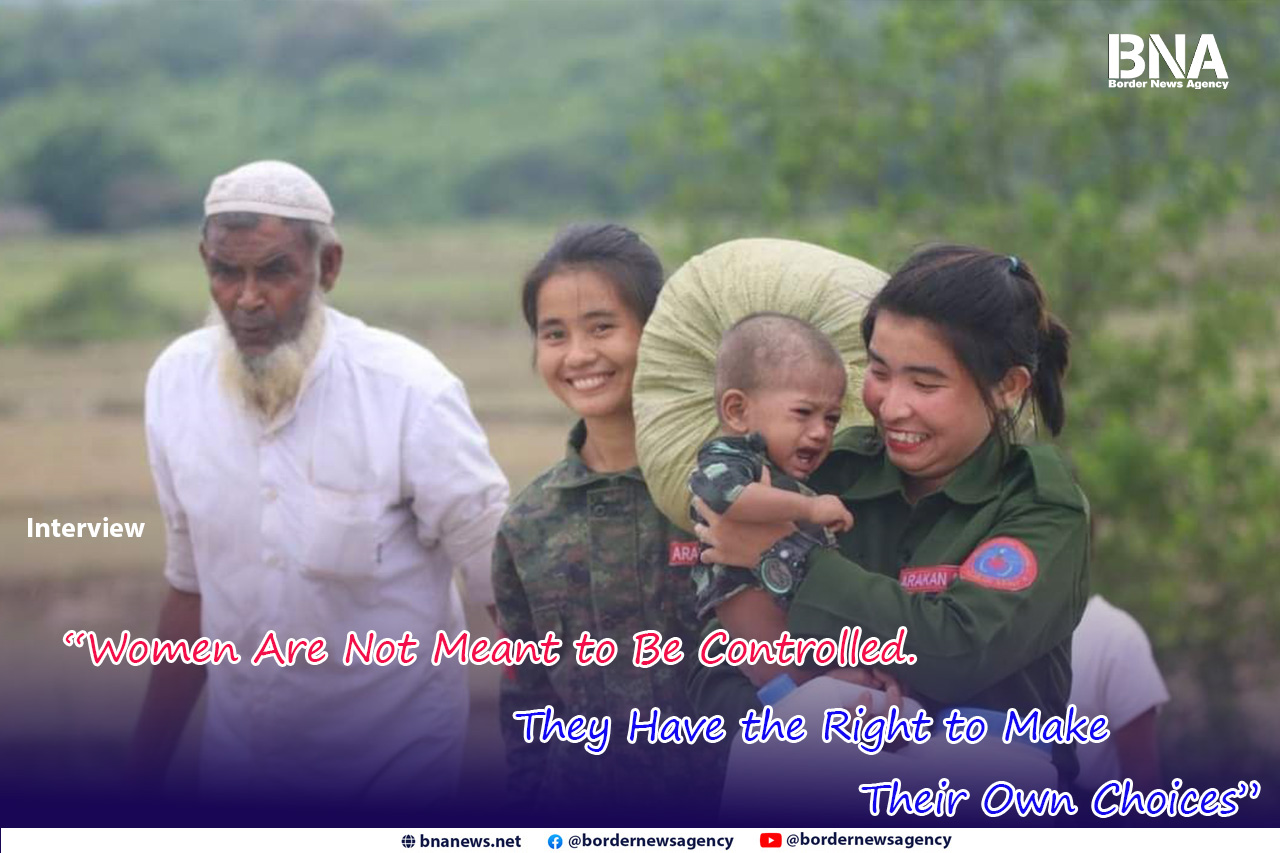
We have continued to share an important message with women and the wider community: Women are not meant to be controlled. They have the right to make their own choices and decisions.
It is encouraging to see that, in today’s generation, both young women and young men are actively participating in this work.”